
Support
Secure Payment Methods
Book your Pakistan tour with confidence using our trusted international and regional payment options.




Islamabad is the capital of Pakistan and one of the country's most distinctive cities, known for its wide avenues, green spaces, modern architecture and dramatic setting beneath the Margalla Hills. Unlike many large South Asian cities, Islamabad combines an organized urban environment with forests, hiking trails, historic villages, museums and mountain viewpoints.
The city was developed as Pakistan's new capital in the 1960s and has since become an important political, diplomatic and cultural center. Its location at the foot of the Margalla Hills also makes Islamabad an attractive destination for travelers who want to combine city sightseeing with nature and outdoor activities.
Major attractions include Faisal Mosque, Pakistan Monument, Lok Virsa Heritage Museum, Daman-e-Koh, Pir Sohawa, Saidpur Village, Rawal Lake and the Margalla Hills. Pakistan's national tourism resources also identify Shah Allah Ditta, Lake View Park, F-9 Park and several hiking trails among the city's tourist attractions.
Islamabad is also a practical starting point for journeys toward Taxila, Murree, the Galiyat and the mountains of northern Pakistan. The Karakoram Highway route from Islamabad eventually connects travelers with Gilgit, Hunza, Sost and Khunjerab Pass.
Islamabad offers a different experience from Pakistan's historic and densely populated major cities. The capital is surrounded by greenery, carefully planned residential sectors, parks and the forested slopes of the Margalla Hills.
For first-time visitors to Pakistan, the city provides a comfortable introduction to the country's modern capital while still offering opportunities to experience Islamic architecture, regional culture, traditional villages and natural landscapes.
The city is particularly appealing to travelers who enjoy a mixture of sightseeing and outdoor activities. A morning hike in the Margalla Hills can be followed by a museum visit, a traditional meal or an evening overlooking the city from a mountain viewpoint.
Pakistan's national tourism authority describes Islamabad as the country's capital and highlights its lush green landscape, parks, landmarks, museums, lakes, historic sites and hiking opportunities.
Islamabad is located in the Islamabad Capital Territory in northern Pakistan, immediately beside Rawalpindi and at the southern foothills of the Margalla Hills.
The city occupies a strategic position between the plains of Punjab and the mountainous regions farther north.
This location makes Islamabad an important transport and tourism hub. Travelers can visit nearby cultural destinations such as Taxila or continue toward the mountain regions of Khyber Pakhtunkhwa, Gilgit-Baltistan and northern Punjab.
Islamabad replaced Karachi as Pakistan's capital during the 1960s. The city was planned as a purpose-built national capital, with distinct sectors, broad roads, government districts and large areas of greenery.
The modern capital is home to Pakistan's parliament, diplomatic missions, government institutions and many national cultural organizations.
Its planned character, relatively spacious streets and proximity to the Margalla Hills have contributed to Islamabad's reputation as one of Pakistan's greenest major cities.
Although modern Islamabad is relatively young, the wider region has a much older history.
The area around the present capital lies close to ancient settlements and historic routes connecting the plains with the mountain regions of northern Pakistan.
Nearby Taxila preserves evidence of ancient civilizations and Buddhist learning, while Shah Allah Ditta contains historic caves and remnants associated with old travel routes.
The modern city was planned and developed to serve as Pakistan's national capital, creating a new urban center beside the older city of Rawalpindi.
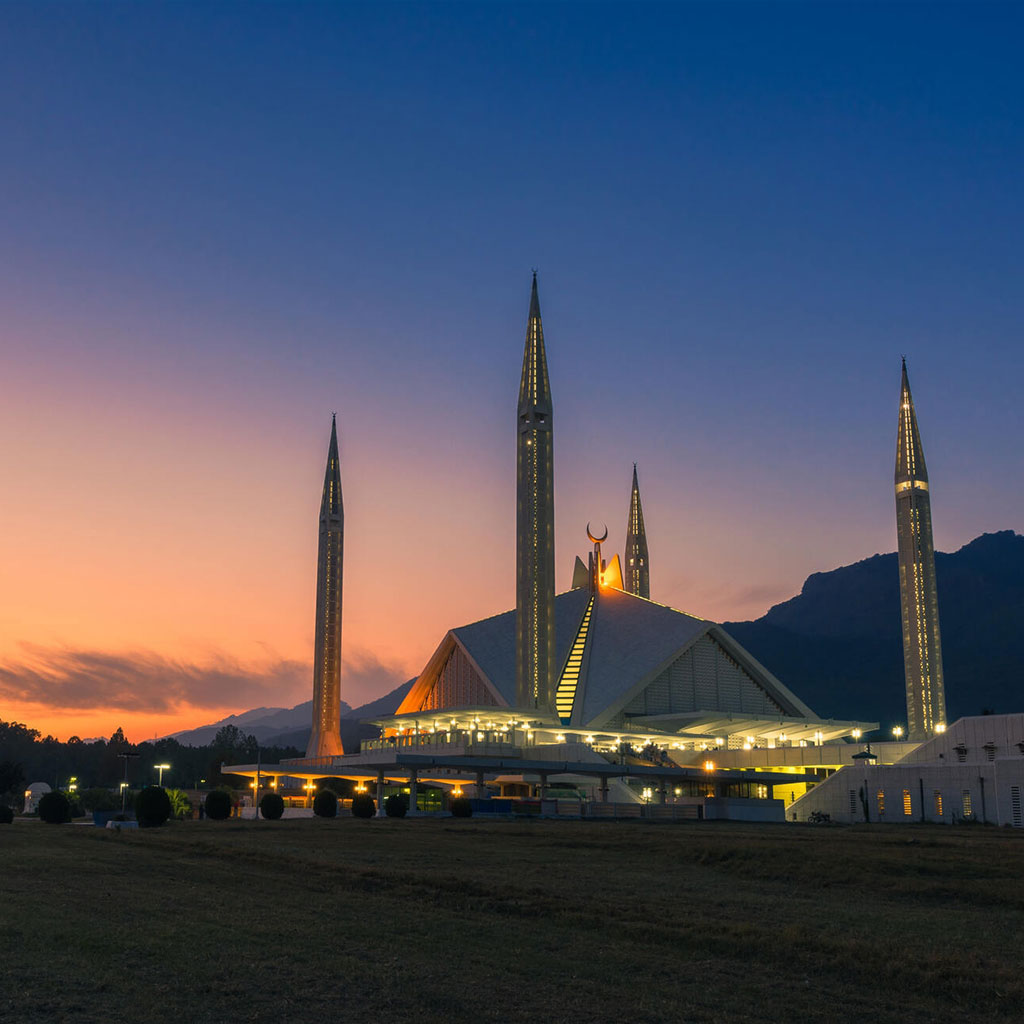
Faisal Mosque is the most recognizable landmark in Islamabad and one of the largest mosques in Pakistan.
The mosque stands at the foot of the Margalla Hills and is known for its distinctive contemporary design inspired by the shape of a Bedouin tent.
Its large prayer hall and four tall minarets create a striking silhouette against the mountains.
The mosque is both a major religious site and one of Islamabad's most photographed landmarks. Visitors should dress respectfully and follow the rules applying to worshippers and visitors.
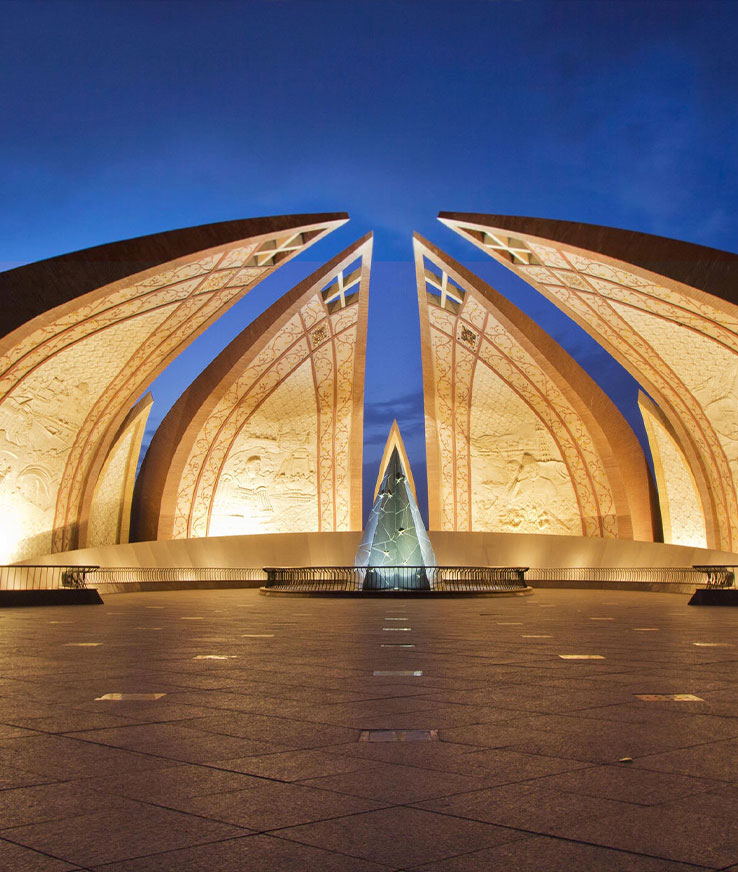
The Pakistan Monument stands on the Shakarparian Hills and is designed to represent the unity of Pakistan's provinces and territories.
The monument's large petal-shaped structure has become one of the visual symbols of the capital.
The elevated location also provides views across Islamabad and makes the monument particularly attractive around sunset.
The adjacent Pakistan Monument Museum provides additional historical and cultural context for visitors interested in the development of Pakistan.
Lok Virsa Heritage Museum is one of the best places in Islamabad to learn about Pakistan's diverse regional cultures.
The museum presents traditional arts, crafts, costumes, musical traditions and cultural objects from different parts of the country.
For international visitors, a visit to Lok Virsa can provide useful context before traveling to regions such as Punjab, Khyber Pakhtunkhwa, Sindh, Balochistan or Gilgit-Baltistan.
The museum is located in the Shakarparian area near the Pakistan Monument.
Shakarparian is a green hill area between central Islamabad and Rawalpindi and is home to several important cultural attractions.
The area includes the Pakistan Monument and museum as well as viewpoints and landscaped spaces.
Its elevated position provides an opportunity to look across Islamabad while remaining close to the city's main attractions.
Shakarparian can easily be combined with the Pakistan Monument and Lok Virsa during a half-day city tour.
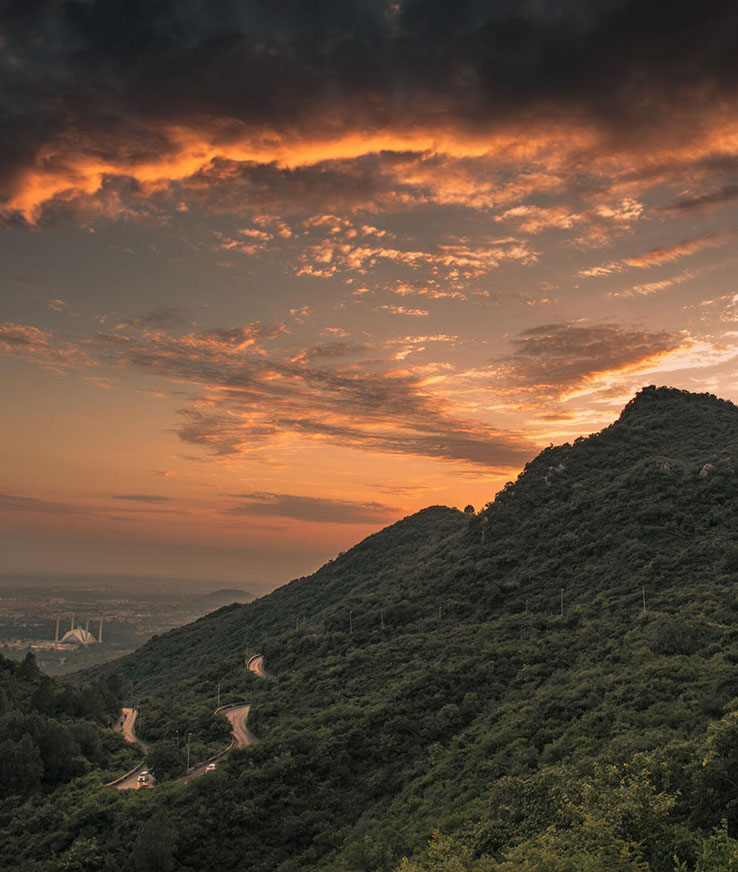
Daman-e-Koh is one of Islamabad's most popular viewpoints in the Margalla Hills.
The viewpoint overlooks the city and provides broad views toward the urban areas and surrounding plains.
It is especially attractive around late afternoon and sunset when the changing light creates different perspectives across Islamabad.
Daman-e-Koh can also be combined with other Margalla Hills activities and the road toward Pir Sohawa.
Pir Sohawa is a scenic mountain destination above Islamabad, reached by road through the Margalla Hills.
The elevated location provides panoramic views across the capital and surrounding countryside.
It is particularly popular for evening outings, mountain scenery and dining with a view.
Travelers visiting Pir Sohawa should allow extra time for the winding mountain road and changing weather conditions.
The Margalla Hills National Park forms the green mountainous backdrop of Islamabad and is one of the city's greatest natural assets.
The park contains forested slopes, hiking trails, viewpoints and wildlife habitats close to the urban center.
Pakistan's national tourism material specifically highlights the Margalla Hills National Park and its hiking trails among Islamabad's outdoor attractions.
The hills offer a welcome contrast to the city's urban areas and make Islamabad particularly attractive for travelers who enjoy nature.
Islamabad is one of the best major cities in Pakistan for combining urban tourism with hiking.
The Margalla Hills contain numerous trails with different levels of difficulty. Some are suitable for casual walkers, while others involve steeper climbs and longer distances.
Popular trails around the Margalla Hills lead toward viewpoints and forested areas above the city.
Hikers should carry sufficient water, wear suitable footwear and avoid unfamiliar trails without local knowledge.
Saidpur Village is a historic settlement located on the lower slopes of the Margalla Hills.
The village provides a contrast to Islamabad's modern planned environment and preserves elements of older village architecture and cultural life.
Visitors can walk through the historic area, explore traditional buildings and enjoy local food while surrounded by the Margalla landscape.
Saidpur is particularly convenient because it can be combined with Faisal Mosque, Daman-e-Koh and other central Islamabad attractions during the same day.
Shah Allah Ditta is a historic village and cave area on the western side of Islamabad.
The caves and surrounding landscape provide evidence of the long history of human movement through the region.
The location is particularly interesting for travelers who want to explore a less commercial side of Islamabad.
Visitors can combine the caves with a broader cultural and historical exploration of the capital's northern and western edges.
Rawal Lake is a major recreational area near Islamabad and provides an open landscape surrounded by hills and greenery.
The lake and its surrounding park are popular for walks, family outings, photography and relaxing away from the busier parts of the city.
Rawal Lake is also a useful stop for travelers who want to include a mixture of nature and urban sightseeing in one Islamabad itinerary.
Lake View Park is located beside Rawal Lake and offers recreational spaces for visitors.
The park is suitable for families and travelers looking for a relaxed outdoor experience after visiting the city's cultural attractions.
Its location makes it easy to combine with Rawal Lake and other attractions in the southern part of Islamabad.
Fatima Jinnah Park, commonly known as F-9 Park, is one of the largest green spaces in Islamabad.
The park provides open areas for walking, recreation and relaxation and reflects the city's emphasis on green public spaces.
For visitors staying in the northern and central sectors of Islamabad, F-9 Park can be an easy place to experience the city's everyday outdoor life.
The Rose and Jasmine Garden is another green space associated with Islamabad's reputation as a garden city.
The garden provides a quieter environment for visitors interested in flowers, landscaping and leisurely walks.
It can be included in a broader city tour alongside Shakarparian, the Pakistan Monument and Lok Virsa.
Islamabad offers several museums and cultural institutions that provide an introduction to Pakistan's history and regional diversity.
Among the most useful stops for travelers are:
A museum visit is particularly useful at the beginning of a longer Pakistan journey because it provides context for the different cultures and landscapes travelers will encounter around the country.
Islamabad's food scene reflects both traditional Pakistani cuisine and the international character of the capital.
Travelers can find Punjabi dishes, barbecue, traditional breads, Pakistani sweets, regional cuisines and a wide variety of international food.
Saidpur and the city's established commercial districts offer opportunities to combine dining with sightseeing.
Visitors interested in Pakistani cuisine should try regional dishes rather than limiting their experience to international restaurants.
Islamabad has a mixture of traditional markets, shopping centers and local commercial areas.
Visitors can shop for Pakistani clothing, handicrafts, traditional foods, books, souvenirs and locally produced products.
For travelers looking for cultural souvenirs, it is worth asking about the origin of handicrafts and choosing locally produced items whenever possible.
Islamabad offers an unusual combination of modern architecture, Islamic landmarks, forests and mountains.
Popular subjects include:
Early morning and late afternoon generally provide softer natural light for outdoor photography.
The Margalla Hills bring wildlife and natural habitats surprisingly close to Islamabad's urban neighborhoods.
The forested hills support a variety of birds, mammals and other wildlife associated with the Himalayan foothills.
Visitors should observe wildlife from a distance and avoid feeding or disturbing animals.
Birdwatching can be particularly rewarding during quieter morning walks in the Margalla Hills.
Islamabad's location makes it an excellent base for exploring several important destinations outside the capital.
Popular day-trip options include:
Travel time can vary significantly depending on traffic and road conditions, so travelers should plan day trips with enough flexibility.
Taxila is one of the most important archaeological destinations near Islamabad.
The ancient region contains archaeological remains associated with several civilizations and was an important center of Buddhist learning.
For travelers interested in archaeology, history and cultural heritage, Taxila makes an excellent addition to an Islamabad itinerary.
Its proximity to the capital also makes it practical as a half-day or full-day excursion.
Murree and the wider Galiyat region provide a mountain escape from Islamabad.
The area is known for forested hills, cooler temperatures and scenic mountain roads.
Pakistan's tourism guide identifies the Murree Hills and Galiyat as popular summer resorts close to Islamabad.
Travelers can combine Islamabad sightseeing with a short mountain stay in Murree or continue farther into the Galiyat.
Islamabad is one of the most important starting points for journeys to northern Pakistan.
Road routes from the capital connect travelers toward Abbottabad, Mansehra, Besham, Chilas and eventually Gilgit, Hunza and the Karakoram Highway.
The official Pakistan tourism guide describes the Karakoram Highway as connecting Islamabad with Abbottabad, Mansehra, Besham, Chilas, Gilgit, Hunza, Sost and Khunjerab Pass.
This makes Islamabad a natural first or final stop on longer journeys to destinations such as Gilgit, Karimabad, Gulmit, Passu and Khunjerab Pass.
The best time to visit Islamabad depends on the activities included in your itinerary.
Spring is one of the most pleasant periods, with mild temperatures and green landscapes.
Autumn provides comfortable weather and clear views of the Margalla Hills.
Winter is generally cooler and can be a good time for sightseeing, hiking and cultural exploration.
Summer can be hot and humid, but the Margalla Hills and nearby mountain destinations offer cooler alternatives.
Islamabad has a seasonal climate influenced by its location near the foothills of the Margalla Hills.
Spring and autumn are generally comfortable for walking and sightseeing.
Summer can bring high temperatures and monsoon rainfall, while winter brings cooler and sometimes foggy conditions.
Mountain areas around Islamabad can experience noticeably different weather from the city, so travelers planning hiking or day trips should check local conditions before departure.
Islamabad is connected to major cities across Pakistan by air, road and rail through the wider Islamabad-Rawalpindi transport network.
The city is also an important starting point for road journeys toward northern Pakistan.
Travelers arriving internationally can use Islamabad International Airport before continuing into the capital or beginning a private Pakistan tour.
Islamabad International Airport is the principal international gateway for the capital region.
The airport serves Islamabad and nearby Rawalpindi and provides connections for travelers arriving in Pakistan before continuing to domestic destinations or beginning an overland journey.
For travelers visiting northern Pakistan, Islamabad is often the first major stop before continuing toward Hunza, Skardu, Fairy Meadows and other mountain destinations.
Islamabad is relatively easy to navigate compared with many large South Asian cities because of its planned road network.
Private cars, taxis, ride-hailing services and public transport can all be used depending on the itinerary.
For sightseeing outside the central city, particularly visits to the Margalla Hills, Taxila or northern Pakistan, a private vehicle with a local driver can provide greater flexibility.
One day is enough for a quick introduction to Faisal Mosque, Pakistan Monument, Lok Virsa and one of the city's viewpoints.
Two days allow a more relaxed combination of cultural attractions, Saidpur Village and the Margalla Hills.
Three days provide enough time for hiking, museums, viewpoints and a nearby excursion such as Taxila.
Travelers using Islamabad as the beginning of a northern Pakistan journey may want to spend an additional day before continuing north.
Islamabad offers accommodation across different neighborhoods and budgets, from established hotels to guesthouses and serviced apartments.
Travelers focused on sightseeing may prefer accommodation with convenient access to the central sectors and major roads.
Those planning early departures toward northern Pakistan may prefer accommodation with easy access to the main highways.
International visitors should choose accommodation based on their itinerary rather than relying only on proximity to the airport.
Islamabad is well suited to family travel because the city offers parks, museums, viewpoints, cultural attractions and relatively easy day trips.
Families can combine Faisal Mosque and Pakistan Monument with Lok Virsa, Lake View Park, F-9 Park or a gentle Margalla Hills walk.
For younger children, parks and recreational areas can provide a useful balance between sightseeing and relaxation.
Responsible tourism is important in both Islamabad's cultural sites and its natural areas.
Islamabad is located in northern Pakistan in the Islamabad Capital Territory, at the southern foothills of the Margalla Hills and next to Rawalpindi.
Islamabad is famous for Faisal Mosque, the Pakistan Monument, its green spaces, Margalla Hills, hiking trails, museums, Saidpur Village and its role as Pakistan's capital and gateway to northern Pakistan.
Faisal Mosque is famous for its distinctive modern Islamic architecture, large prayer hall, four minarets and dramatic location beneath the Margalla Hills.
The Pakistan Monument is a national landmark on Shakarparian Hills designed to represent the unity of Pakistan. The adjacent museum provides historical and cultural information about the country.
Yes. The Margalla Hills are directly beside Islamabad and contain hiking trails, viewpoints and mountain roads accessible from the city.
Saidpur Village is a historic settlement on the Margalla Hills that provides visitors with an opportunity to experience traditional architecture, local culture and dining close to central Islamabad.
Shah Allah Ditta Caves are historic caves and archaeological features in a traditional settlement on the western side of Islamabad. They offer an interesting alternative to the city's better-known modern landmarks.
Yes. Taxila is close enough to Islamabad to be visited as a day trip. Its archaeological sites and Buddhist heritage make it particularly valuable for travelers interested in history and archaeology.
Yes. Murree and the Galiyat are accessible from Islamabad by road and are popular mountain escapes, particularly during warmer months.
Yes. Islamabad is one of the main gateways to northern Pakistan. Road routes connect the capital with Abbottabad, Mansehra, Chilas, Gilgit, Hunza, Sost and Khunjerab Pass.
Spring and autumn are particularly pleasant for sightseeing and outdoor activities. Winter is also suitable for city exploration, while summer can be hot but works well when combined with cooler mountain destinations.
Yes. Winter can be a comfortable period for exploring the city's cultural attractions and hiking trails, although mornings and evenings can be cold.
Two to three days are ideal for most travelers who want to see the city's main landmarks, explore the Margalla Hills and visit one nearby attraction such as Taxila.
Yes. Islamabad offers parks, museums, cultural attractions, scenic viewpoints and relatively easy outdoor activities, making it a good destination for family travel.
Yes. Islamabad is a natural starting point for longer journeys to Hunza, Gilgit, Skardu and other destinations in northern Pakistan.
Islamabad is an ideal starting point for exploring Pakistan beyond the capital. From the mountains of Gilgit-Baltistan to the historic cities of Punjab and Sindh, travelers can build a journey around different landscapes, cultures and heritage sites.
Islamabad offers a strong introduction to Pakistan through its national landmarks, museums, historic villages, green spaces and mountain landscapes. The city is equally useful as a destination in its own right and as the starting point for a longer journey across Pakistan.
A well-planned Islamabad itinerary can combine Faisal Mosque, Pakistan Monument, Lok Virsa, Saidpur Village and the Margalla Hills with nearby Taxila or Murree.
For travelers continuing north, Islamabad provides the natural starting point for journeys toward Gilgit, Hunza, Skardu and the high mountains of Gilgit-Baltistan.
Adventure Touristik can include Islamabad in a private or customized Pakistan itinerary based on your travel dates, interests, group size and preferred pace.
Explore our Pakistan Tours and start planning your Islamabad and northern Pakistan journey with Adventure Touristik.
FEATURED ARTICLE
Islamabad is surrounded by amazing spots that blend nature and culture. The grand Faisal Mosque stuns with its size and beauty, while the Margalla Hills and Daman-e-Koh offer scenic hikes and breathtaking city views. Saidpur Village brings a touch of history with its old-world charm and cozy cafes. Shakarparian Park is perfect for a relaxing day out, near the striking Pakistan Monument. Rawal Lake invites you for a peaceful boat ride, and Lok Virsa Museum showcases Pakistan’s rich heritage. For a quick getaway, Pir Sohawa serves up hilltop vibes and great food. These sights make Islamabad’s surroundings truly special!
FEATURED ARTICLE
Exploring the sights around Islamabad is an experience that fills you with wonder and calm. Standing in awe at Faisal Mosque, you feel the quiet power of its vast, modern design. Hiking the Margalla Hills or gazing out from Daman-e-Koh, the fresh air and sweeping views lift your spirits. Wandering through Saidpur Village, you’re charmed by its old streets and warm food, like stepping back in time. Shakarparian Park offers a laid-back day under the trees, while Rawal Lake’s gentle waters soothe your soul as you boat across. Lok Virsa Museum sparks curiosity with its colorful glimpse of Pakistan’s past, and Pir Sohawa tops it off with a scenic drive and a meal in the clouds. It’s a journey of peace, beauty, and little joys!
FEATURED ARTICLE
Discover Pakistan's capital through Faisal Mosque, Pakistan Monument, Lok Virsa, Saidpur Village, Shakarparian and the green landscapes of the Margalla Hills.
FEATURED ARTICLE
Combine Islamabad's major landmarks with hiking, mountain viewpoints and peaceful forest landscapes in the Margalla Hills.
FEATURED ARTICLE
Explore the modern capital of Pakistan before traveling to nearby Taxila to discover ancient archaeological sites and the region's rich Buddhist heritage.
FEATURED ARTICLE
Begin in Islamabad and travel north through the Karakoram landscape toward Gilgit and Hunza, combining the capital's cultural landmarks with spectacular mountain scenery.
FEATURED ARTICLE
Follow the journey from Pakistan's capital through Gilgit, Hunza, Upper Hunza and Sost to the high-altitude Khunjerab Pass on the Pakistan-China border.
FEATURED ARTICLE
Combine Islamabad's cultural landmarks with the historic forts and mountain landscapes of Hunza and the spectacular valleys, lakes and heritage sites of Skardu.
FEATURED ARTICLE
Start in Islamabad and travel into northern Pakistan through Gilgit, Hunza, Passu and Skardu for a broader experience of the country's mountains, culture and heritage.
Thoughtful thoughts to your inbox
Book your Pakistan tour with confidence using our trusted international and regional payment options.
Follow us @AdvTouristik
Copyright © 2026 Adventure Touristik Pvt Ltd®. All Rights Reserved.

