Support
Secure Payment Methods
Book your Pakistan tour with confidence using our trusted international and regional payment options.




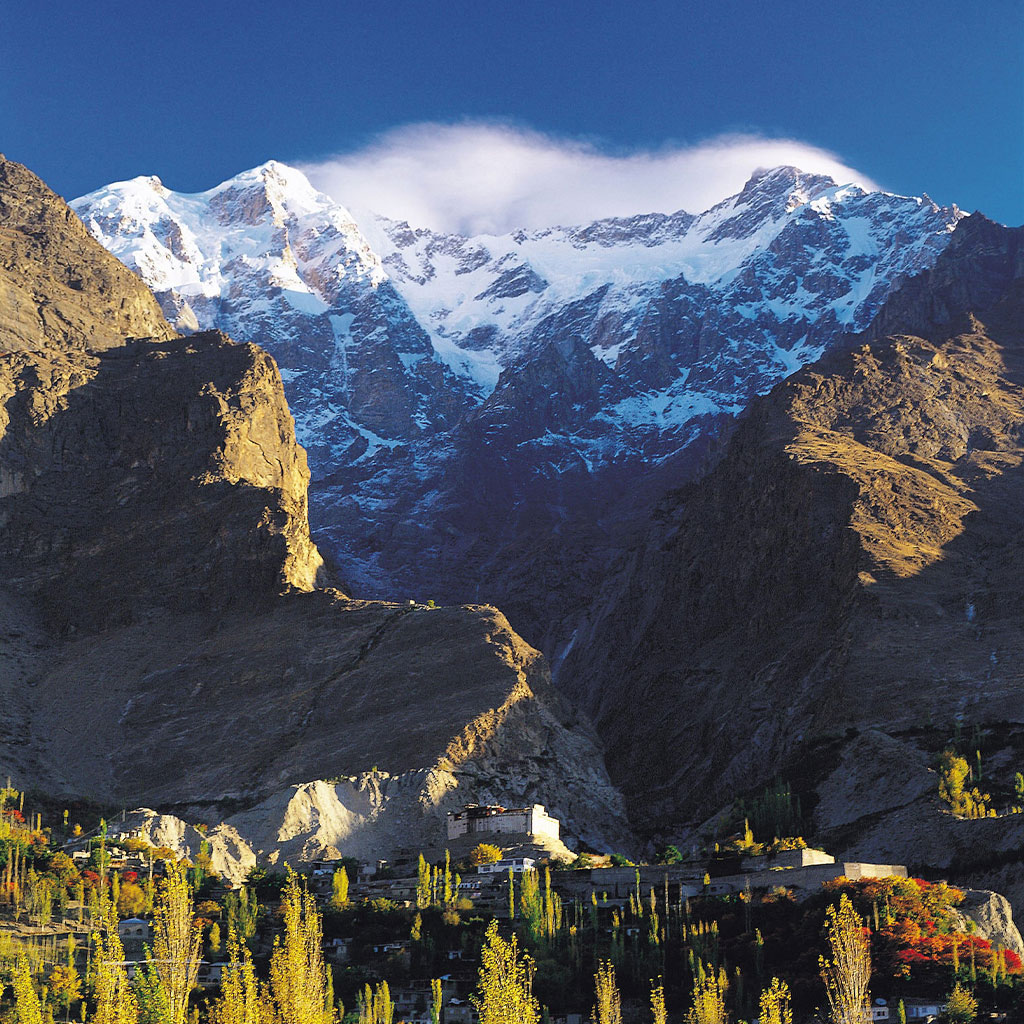
Karimabad is the cultural and historic heart of Hunza Valley, surrounded by some of the most spectacular mountains in northern Pakistan. Formerly known as Baltit, the town sits on a mountain terrace above the Hunza River and combines centuries of history with traditional villages, orchards, local markets and dramatic Karakoram scenery.
For many travelers, Karimabad is the natural starting point for discovering Hunza. The town provides easy access to the historic Baltit Fort, the ancient Altit Fort, Eagle's Nest viewpoints, traditional settlements and the surrounding mountain trails.
The Government of Gilgit-Baltistan describes Karimabad as a destination known for its cultural heritage, beautiful landscapes and hospitality, with the ancient Baltit Fort among its best-known attractions.
Karimabad is also an excellent base for exploring the wider Hunza Valley. Travelers can continue north toward Attabad Lake, Gulmit, Passu and Khunjerab Pass while returning to Karimabad for its accommodation, restaurants and relaxed mountain atmosphere.
Karimabad brings together history, culture and mountain scenery in one of the most accessible destinations in Gilgit-Baltistan.
The town's historic forts tell the story of Hunza's former rulers, while its narrow streets, orchards, traditional homes and bazaars reveal everyday life in the valley.
From Karimabad, travelers can look toward high peaks such as Rakaposhi and Ultar Sar, explore ancient settlements and enjoy the changing colors of the Hunza landscape.
It is equally suitable for travelers interested in cultural heritage, photography, hiking, food or simply spending several peaceful days among the mountains.
Karimabad is located in Hunza District, Gilgit-Baltistan, Pakistan, in the central part of Hunza Valley.
The town is positioned above the Hunza River and is connected to the wider region by the Karakoram Highway through nearby Aliabad.
Its location makes it a convenient base for exploring:
Karimabad is one of the main tourist centers of Hunza Valley and an important cultural destination in Gilgit-Baltistan.
Hunza is known for its high mountains, traditional communities, historic forts, agricultural terraces and distinctive local culture. The wider district includes both the central Hunza area around Karimabad and the upper valleys extending toward the Pakistan-China border.
The Government of Gilgit-Baltistan highlights Hunza's cultural heritage, traditional dresses, music, dances, cuisines, historic forts and mountain scenery as major attractions.
Karimabad provides one of the easiest places to experience many of these features within a relatively compact area.
Karimabad was formerly known as Baltit and served as an important political center of the former Hunza state.
The town's history is closely connected with the ruling Mirs of Hunza and the historic forts that dominate the surrounding landscape.
Over time, Karimabad developed from a traditional mountain settlement into a major tourism center while retaining much of its historic character.
The town's forts, old villages, irrigation channels, agricultural terraces and traditional architecture provide an opportunity to understand how communities developed and prospered in the difficult environment of the Karakoram.
Baltit Fort is the most recognizable historic landmark in Karimabad.
Perched above the town, the fort overlooks the Hunza Valley and surrounding mountains. Its architecture reflects the cultural exchanges that took place across the mountain routes of the region.
The National Tourism Portal describes Baltit Fort as a centuries-old fortress associated with the Mirs of Hunza and notes its Tibetan-influenced architectural character, museum collections and panoramic views.
The restored fort now functions as a heritage and museum site where visitors can explore historic rooms, architectural details and artifacts associated with the former ruling family.
The location also provides excellent views over Karimabad and the Hunza Valley.
Altit Fort is one of the oldest surviving monuments in the Hunza region and stands above Altit village a short distance from Karimabad.
The fort predates Baltit Fort and was historically associated with the earlier seat of Hunza's rulers.
The official Altit Fort heritage organization describes it as an approximately 1,100-year-old monument and highlights its traditional construction, historic village setting and restoration work.
The restored fort, surrounding old village and gardens provide a deeper cultural experience than simply visiting a historic building.
Visitors can combine the fort with a walk through Altit village and time in the gardens.
Eagle's Nest is one of the most popular viewpoints around Karimabad.
Located above the Hunza Valley, the viewpoint offers wide mountain panoramas and is particularly popular around sunrise and sunset.
From the higher viewpoints, travelers can see an impressive collection of surrounding peaks and valleys.
Eagle's Nest is an excellent destination for photographers because changing sunlight can dramatically alter the appearance of the mountains throughout the day.
Karimabad Bazaar is the social and commercial center of the town.
The bazaar is a good place to walk through local shops, purchase traditional products and sample regional foods.
Visitors can find dried fruits, handicrafts, textiles, gemstones, traditional items and locally produced foods.
The market is also a useful place to interact with local businesses and experience the everyday atmosphere of Karimabad.
Ganish is an ancient settlement near Karimabad and one of the historically important villages in Hunza.
The village contains old mosques, traditional homes and archaeological features that reflect the history of communities along the ancient mountain routes.
The Government of Gilgit-Baltistan lists the Sacred Haldekish Rocks at Ganish among the archaeological attractions of Hunza.
A visit to Ganish complements the larger forts by showing how ordinary residential communities developed around the historic center of Hunza.
The gardens around Altit Fort provide a peaceful contrast to the rugged mountains surrounding Hunza.
Fruit trees, traditional water channels and cultivated terraces reflect the agricultural traditions that have supported communities in the valley for generations.
The official Altit Fort organization notes that the restored gardens are open to visitors and include the KhaBasi Café, which serves traditional local dishes.
The gardens are particularly pleasant during spring and summer when the surrounding vegetation is green and fruit trees are active.
Ultar Sar rises dramatically above Karimabad and forms one of the most striking mountain backdrops in the town.
The peak and surrounding mountains create a dramatic setting for hiking and mountain photography.
For experienced trekkers, the valleys and trails above Karimabad provide access to more demanding mountain environments.
Visitors interested only in sightseeing can enjoy the mountain views from the town and nearby viewpoints without entering technical terrain.
Rakaposhi is one of the great peaks visible from the Hunza region and reaches approximately 7,788 metres.
Clear weather can reveal the mountain from various viewpoints around Karimabad and the wider Hunza Valley.
The contrast between the cultivated valley floor and the enormous snow-covered peak is one of the defining visual experiences of a trip to Hunza.
For the best photography, early morning and late afternoon often provide softer mountain light.
Karimabad provides an accessible introduction to the distinctive cultural traditions of Hunza.
Local languages include Burushaski, Shina and Wakhi, while Urdu and English are also widely used in tourism and wider communication.
Traditional music, food, agriculture, handicrafts and community life remain important parts of the valley's identity.
Travelers can experience this culture through local markets, village walks, traditional food and visits to historic settlements.
The traditional architecture around Karimabad reflects centuries of adaptation to the mountain environment.
Stone and timber structures, narrow village lanes, irrigation channels and terraced agricultural areas form an important part of the cultural landscape.
Historic buildings should be treated as living heritage rather than simply tourist attractions. Many traditional homes remain part of active communities.
Visitors should avoid entering private areas without permission and should respect local residents.
Food is an important part of the Hunza experience.
Traditional dishes reflect the valley's agricultural resources and mountain lifestyle. Travelers can try local breads, grains, vegetables, dairy products, meat dishes and seasonal fruits.
Apricots and other fruits are particularly associated with Hunza, while local teas and traditional dishes are widely available in restaurants and guesthouses.
Trying locally prepared food is an easy way to support small businesses while experiencing an important part of Hunza culture.
Hunza is particularly well known for its apricots and other fruit products.
Apricots are grown throughout the valley and are commonly dried for use throughout the year.
Visitors can find dried apricots, jams, nuts and other local products in Karimabad's shops and markets.
Purchasing locally produced food provides direct support to farmers, small businesses and local producers.
Karimabad is one of the best places in Hunza to look for locally produced handicrafts and traditional products.
When shopping, ask about the origin of products and support genuine local craftsmanship where possible.
Karimabad offers access to a variety of walks and hikes ranging from easy village routes to more demanding mountain trails.
Walking around the old settlements provides an opportunity to see agricultural terraces, irrigation channels, traditional homes and mountain views.
More demanding routes toward Eagle's Nest, Ultar and surrounding mountain valleys require better fitness and preparation.
For longer mountain routes, local guides are recommended because weather and terrain can change quickly.
Karimabad is one of the strongest photography destinations in Hunza because cultural and natural subjects are located close together.
When photographing local people or entering traditional residential areas, always ask permission first.
Attabad Lake is one of the most popular natural attractions in Hunza and can be easily combined with a Karimabad stay.
The turquoise lake is surrounded by steep mountains and offers opportunities for photography and water-based activities during suitable seasons.
The Government of Gilgit-Baltistan lists Attabad Lake among the major tourist attractions of Hunza and highlights boating and other recreational activities.
For travelers continuing toward Upper Hunza, Attabad Lake lies naturally along the route toward Gulmit and Passu.
Gulmit is one of the important cultural settlements of Gojal and is located farther north along the Karakoram Highway.
The village is known for its Wakhi culture, traditional architecture and the Ondra Poygah trail leading toward Ondra Fort.
Karimabad can be used as the starting point for a longer journey through Gulmit and Upper Hunza.
Explore Gulmit and Upper Hunza.
Passu is one of the most photographed destinations on the Karakoram Highway.
The dramatic Passu Cones rise above the valley and create a distinctive mountain landscape that is very different from the historic terraces around Karimabad.
Passu can be visited as part of a longer Upper Hunza road trip from Karimabad.
Explore Passu and the Passu Cones.
Travelers with enough time can continue north from Karimabad toward Passu, Sost and Khunjerab Pass, the high-altitude Pakistan-China border.
The journey follows the Karakoram Highway through some of the most dramatic mountain scenery in Pakistan.
Khunjerab Pass rises to approximately 4,693 metres and forms the high frontier between Pakistan and China.
Explore the Khunjerab Pass Location Guide.
The best time to visit Karimabad depends on the type of experience you want.
Spring is especially attractive for orchards, blossoms and fresh green landscapes.
Summer is generally the most convenient season for sightseeing, hiking and exploring the wider Hunza Valley.
Autumn brings golden colors to the valley and is excellent for photography.
Winter offers a quieter experience and snow-covered mountains but brings colder weather and potentially more difficult travel conditions.
Karimabad has a dry mountain climate with substantial seasonal differences.
Summer days can be pleasant for exploring the town, while nights remain cooler because of the elevation.
Spring and autumn are particularly appealing for travelers who want comfortable temperatures and attractive landscapes.
Winter can be cold, and travelers visiting outside the main season should confirm accommodation and road conditions before departure.
Karimabad is reached by road from Gilgit via the Karakoram Highway and nearby Aliabad.
Travelers can reach the region by road from Islamabad or other cities in Pakistan, while domestic flights to Gilgit can reduce the overland journey from Islamabad when flights are operating.
From Gilgit, the road journey continues north through the Hunza region toward Karimabad.
Karimabad is approximately 100 kilometres by road from Gilgit, with the journey commonly taking around two to three hours depending on road conditions and stops.
The route follows the Karakoram Highway through the Hunza region.
Travelers should allow additional time if they want to stop for photographs or visit attractions along the way.
Traveling from Islamabad to Karimabad by road is a long northern Pakistan journey and is best planned over several stages.
Many travelers choose to reach Gilgit first and then continue toward Hunza, while others make the journey entirely by road to experience more of the Karakoram Highway.
Because mountain road conditions can affect travel times, a flexible itinerary is recommended.
Two days are enough for a first introduction to Karimabad, including Baltit Fort, Altit Fort and the main town.
Three days allow time for Eagle's Nest, Ganish and a slower exploration of the local culture and food.
Four to five days provide enough flexibility to combine Karimabad with Attabad Lake, Gulmit, Passu and other Upper Hunza attractions.
Travelers planning to continue to Khunjerab or combine Hunza with Skardu should allow additional time.
Karimabad offers a wide range of accommodation, from locally operated guesthouses to more established hotels.
Staying close to the historic center provides easy access to the bazaar, restaurants and cultural attractions.
Travelers who prefer mountain views may choose accommodation on the surrounding slopes or quieter areas outside the main market.
During peak travel periods, advance booking is recommended.
Karimabad is one of the more family-friendly destinations in northern Pakistan because many major attractions can be reached without demanding trekking.
Families can visit the forts, explore the bazaar, enjoy local food and take scenic drives toward Attabad Lake and Upper Hunza.
Longer hikes should be selected according to the age and fitness of the travelers, while high-altitude destinations such as Khunjerab require additional consideration.
Karimabad's appeal comes from the combination of its cultural heritage, local communities and mountain environment.
Karimabad is located in Hunza District, Gilgit-Baltistan, Pakistan. It is one of the principal settlements of Hunza Valley and sits above the Hunza River.
Karimabad is famous for its historic Baltit and Altit Forts, mountain scenery, traditional Hunza culture, Karimabad Bazaar, nearby viewpoints and its role as a base for exploring Hunza Valley.
Baltit Fort is a historic fortress above Karimabad that was associated with the former rulers of Hunza. Today it is a heritage and museum site and one of the most important cultural attractions in the valley.
Altit Fort is an ancient fortress in Altit village near Karimabad. It is older than Baltit Fort and has been restored as an important heritage attraction with its historic village and gardens.
Eagle's Nest is famous for its panoramic mountain views above Hunza. It is particularly popular for sunrise and sunset photography.
Visitors can find traditional handicrafts, textiles, dried apricots, nuts, jams, local food products and other souvenirs associated with Hunza.
Yes. Attabad Lake is one of the major attractions on the route from central Hunza toward Upper Hunza and can easily be included in a Karimabad itinerary.
Yes. Karimabad can serve as a base for a long day excursion toward Khunjerab, although travelers with more time may prefer staying farther north in Gulmit or Passu before visiting the border.
Spring through autumn is generally the most convenient period for exploring Karimabad and the wider Hunza Valley. Spring is attractive for blossoms, summer for outdoor activities and autumn for mountain scenery and photography.
Yes. Winter offers a quieter atmosphere and snow-covered scenery, although temperatures are much colder and road or attraction access can be affected by weather.
Two days are enough for the main historical attractions, while three to five days allow travelers to explore Karimabad at a slower pace and include Attabad Lake, Gulmit, Passu and other parts of Hunza.
Yes. Karimabad is suitable for families because many cultural attractions and scenic locations are accessible without technical trekking. More demanding hikes should be chosen according to individual fitness and experience.
No. Hunza refers to the wider valley and district, while Karimabad is one of the main historic towns and tourism centers within Hunza.
Yes. Karimabad and Hunza can be combined with Skardu in a longer northern Pakistan itinerary. The journey can include major destinations in both regions.
Karimabad is an excellent starting point for exploring the wider mountain landscape of northern Pakistan.
Karimabad is where the history and landscape of Hunza come together. From the ancient forts above the valley to the lively bazaar, traditional villages, orchards and dramatic mountain viewpoints, the town offers a rich introduction to northern Pakistan.
A well-planned Karimabad itinerary can combine the town's historic attractions with Attabad Lake, Gulmit, Passu and Khunjerab Pass, creating a journey that covers both the cultural and natural sides of Hunza.
Adventure Touristik can include Karimabad in a private or customized Hunza itinerary based on your travel dates, interests, group size and preferred pace.
Our 12 Days Hunza & Skardu Valley Tour connects Hunza with Skardu and provides a broader way to experience the mountains, valleys and cultural heritage of northern Pakistan.
Explore Pakistan Tours and start planning your Karimabad and Hunza journey with Adventure Touristik.
FEATURED ARTICLE
Explore the historic heart of Hunza through Baltit Fort, Altit Fort, Ganish Village, traditional architecture, local food and spectacular mountain scenery around Karimabad.
FEATURED ARTICLE
Discover two of Hunza's most important historic forts and learn about the former rulers, architecture and cultural heritage that shaped Karimabad and the wider valley.
FEATURED ARTICLE
Combine the historic streets and mountain viewpoints of Karimabad with the turquoise waters and dramatic scenery of Attabad Lake on a journey through Hunza.
FEATURED ARTICLE
Travel from the historic center of Hunza through Gulmit and Upper Hunza to Passu, combining cultural heritage with some of the most dramatic mountain landscapes of the Karakoram.
FEATURED ARTICLE
Begin in Karimabad and follow the Karakoram Highway through Attabad Lake, Gulmit, Passu and Sost toward Khunjerab Pass and the Pakistan-China border.
FEATURED ARTICLE
Combine Karimabad's historic forts and cultural landscapes with Hunza's mountain valleys and the spectacular lakes, forts and landscapes of Skardu.
FEATURED ARTICLE
Spend more time around Baltit Fort, Altit, Eagle's Nest, Rakaposhi and the traditional villages of Hunza for a slower journey focused on mountain photography and cultural landscapes.
Thoughtful thoughts to your inbox
Book your Pakistan tour with confidence using our trusted international and regional payment options.
Follow us @AdvTouristik
Copyright © 2026 Adventure Touristik Pvt Ltd®. All Rights Reserved.

