
Support
Secure Payment Methods
Book your Pakistan tour with confidence using our trusted international and regional payment options.




Skardu Valley is one of the most spectacular mountain destinations in northern Pakistan, where rugged mountains, cold deserts, turquoise lakes, historic forts and the mighty Indus River come together in one extraordinary landscape. Located in Gilgit-Baltistan, Skardu is widely known as a gateway to some of the highest mountains in the world, including the legendary K2 and the great Karakoram trekking and expedition routes.
From the golden sands of the Katpana Cold Desert to the peaceful waters of Upper Kachura Lake and Shangrila Lake, Skardu offers a remarkable combination of natural beauty and adventure. Historic places such as Kharpocho Fort and Manthal Buddha Rock add another dimension to the valley, while nearby Shigar, Khaplu, Deosai and the Baltoro region connect Skardu with some of the most important cultural and mountain landscapes of Baltistan.
Whether you are planning a Skardu Valley tour, a family holiday, a photography trip, a cultural journey, a road trip through northern Pakistan or an expedition toward K2, Skardu provides an ideal base for exploring the wider Karakoram.
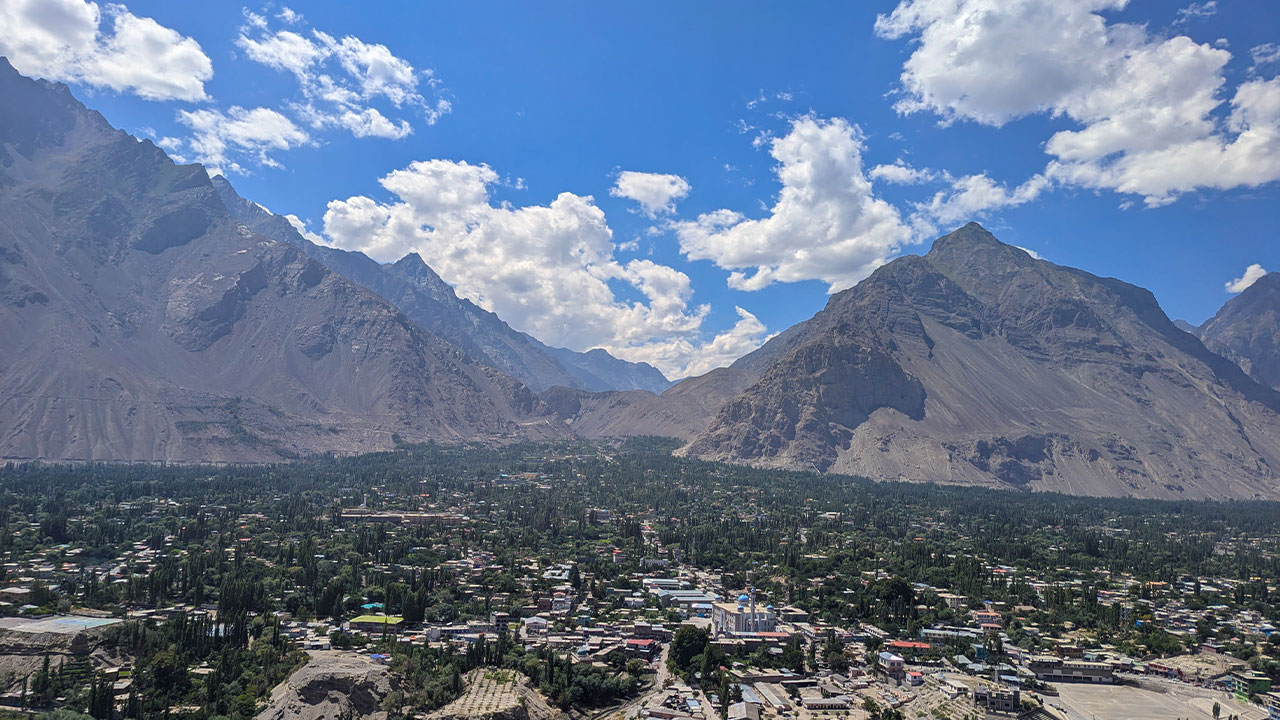
Skardu Valley is the principal gateway to the high mountains and valleys of Baltistan. The landscape is defined by the meeting of the Indus River with major mountain valleys, creating a dramatic setting of dry slopes, river terraces, lakes and enormous peaks. The Government of Gilgit-Baltistan Tourism Department describes Skardu as a major tourism destination and highlights its Kharpocho Fort, Manthal Buddha Rock, Kachura Lakes, Shangrila Lake, Satpara and Katpana Cold Desert among its principal attractions.
The character of Skardu is different from the greener landscapes associated with parts of Hunza. Here, barren mountain slopes and golden desert landscapes can stand immediately beside irrigated fields, orchards, rivers and deep-blue lakes.
This contrast is one of the defining features of Skardu tourism. A traveler can photograph a cold desert in the morning, visit a historic fort in the afternoon and watch the mountains reflected in a lake before sunset.
Skardu Valley is located in the Baltistan region of Gilgit-Baltistan, northern Pakistan. Skardu town serves as an important urban and logistical center for travelers exploring the surrounding valleys and high mountain routes.
The wider Skardu region connects travelers with destinations including Shigar, Khaplu, Deosai, Basho, Satpara and the Kachura Lakes. It is also an important starting point for trekking and mountaineering journeys toward the Baltoro Glacier, Concordia and K2.
The Government of Gilgit-Baltistan identifies Skardu as a route toward some of the world's highest peaks, including K2, Gasherbrum and Broad Peak.
The landscape around Skardu is shaped by the Indus River, surrounding mountain ranges, glacial processes and the dry climate of the high-altitude valleys. The result is a landscape that can change dramatically over relatively short distances.
Rocky mountains rise above green agricultural areas, while sandy and gravel-covered landscapes appear beside clear streams and lakes. This unusual combination gives Skardu some of the most distinctive scenery in northern Pakistan.
For photographers, the valley offers strong contrasts of color and texture: golden mountains, turquoise water, green orchards, white snow and deep blue skies.
The history of Skardu is closely connected with the wider history of Baltistan. The region has been influenced by Tibetan, Central Asian, Kashmiri and Himalayan cultural connections over many centuries.
Skardu became the center of the powerful Maqpon rulers of Baltistan, whose legacy remains visible in historic sites and local traditions. Kharpocho Fort, positioned above Skardu town, is one of the most important physical reminders of this period.
The Government of Gilgit-Baltistan Tourism Department states that Kharpocho Fort was constructed during 1490–1505 and became the capital of the Maqpon dynasty under the rule of Ali Sher Khan Anchan.
The region later experienced the political changes that affected much of Baltistan, including the expansion of Dogra rule during the nineteenth century. The history of Skardu therefore reflects the wider strategic importance of Baltistan as a mountain crossroads between different parts of Inner Asia.
The Maqpon dynasty is central to the historical identity of Skardu. The dynasty ruled Baltistan for centuries and established Skardu as an important political center.
The legacy of the Maqpon rulers can still be experienced through historic forts, traditional architecture, oral traditions and the cultural landscape of Baltistan. Among the most recognizable monuments associated with this history is Kharpocho Fort, sometimes known as the "King of Forts."
Travelers interested in Skardu history should therefore include the old fort and nearby cultural sites rather than treating Skardu only as a gateway for mountain adventures.
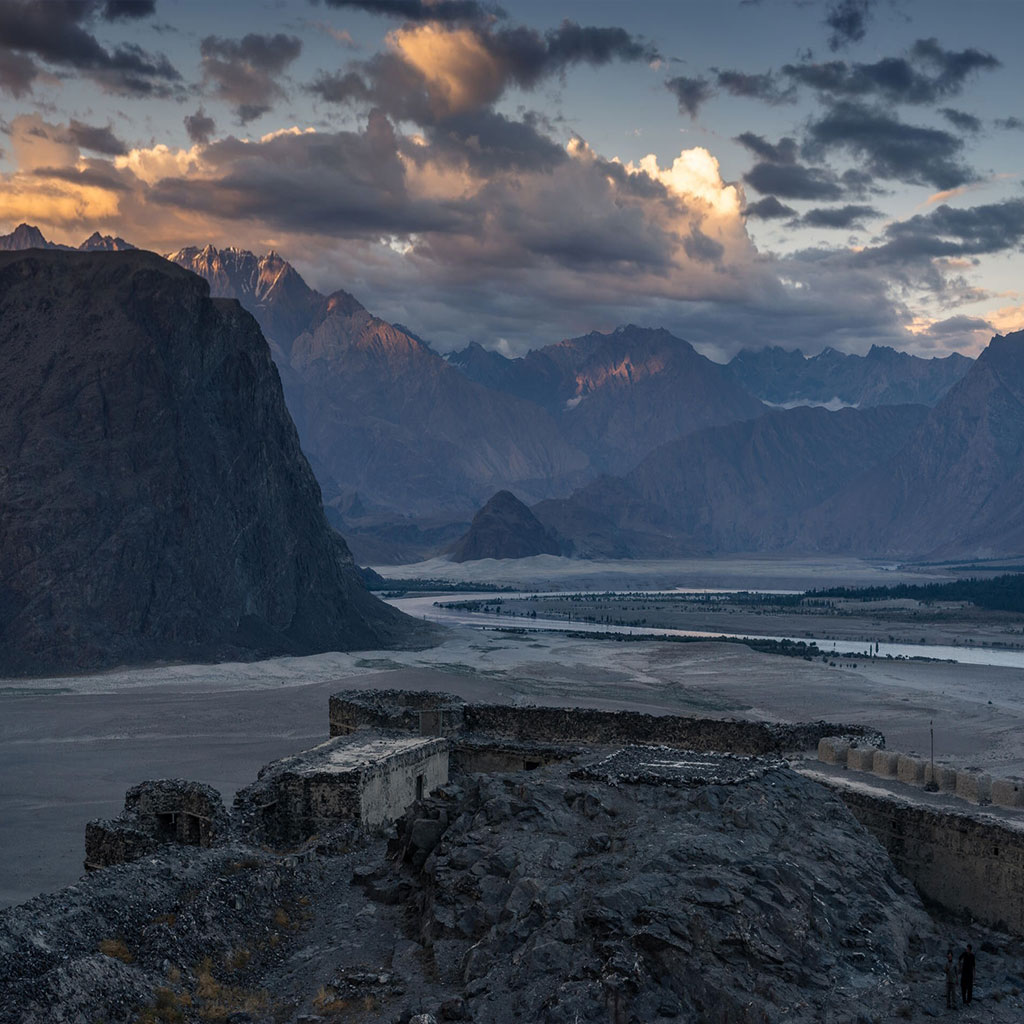
Kharpocho Fort stands on a rocky hill overlooking Skardu town and the surrounding valley. Its elevated position provides an impressive view of the landscape and explains the strategic importance of the site.
The fort is associated with the Maqpon rulers of Skardu and is one of the most important historical attractions in the city. The Government of Gilgit-Baltistan Tourism Department dates its construction to approximately 1490–1505 and describes its role as the capital of the Maqpon dynasty.
A visit to Kharpocho Fort combines history with scenery. From the fort, travelers can look across Skardu town and observe the dramatic relationship between the settlement, river valleys and surrounding mountains.
Manthal Buddha Rock is another important cultural and historical attraction in Skardu. The rock carving provides evidence of the region's Buddhist heritage and the cultural connections that existed across the mountains of Baltistan before Islam became dominant in the region.
The site is particularly valuable for travelers interested in the deeper history of northern Pakistan because it demonstrates that the region's story extends far beyond modern tourism and mountaineering.
Combining Manthal Buddha Rock with Kharpocho Fort provides a useful introduction to the historical layers of Skardu.
The lakes of Skardu are among the valley's most recognizable attractions. Their clear water and dramatic mountain settings have made the region particularly popular with photographers and nature travelers.
Important lakes and lake destinations include Upper Kachura Lake, Lower Kachura Lake, commonly associated with Shangrila, and Satpara Lake.
The official Gilgit-Baltistan tourism portal lists Kachura Lakes and Satpara among Skardu's major tourist destinations.
Upper Kachura Lake is one of the most scenic destinations in Skardu. Surrounded by rugged mountains and clear water, the lake offers a peaceful environment for sightseeing, photography and boating when local conditions permit.
The contrast between the deep water and surrounding rocky landscape makes Upper Kachura particularly attractive during clear weather.
It is commonly included in Skardu tour packages and can be combined with Lower Kachura Lake and Shangrila during a full day of sightseeing.
Lower Kachura Lake is widely known to travelers through the Shangrila Resort area. The lake is surrounded by mountains and vegetation, creating a landscape very different from the dry slopes seen elsewhere around Skardu.
Shangrila is one of the best-known tourism destinations in the Skardu region and is often included in first-time Skardu Valley tours.
The area is especially attractive for visitors who want a combination of lake scenery, relaxation and photography without undertaking a demanding trek.
Satpara Lake is another important natural attraction near Skardu. The lake is surrounded by dramatic mountain terrain and forms part of the wider landscape that supplies water to the Skardu region.
Its location makes it a convenient addition to a Skardu sightseeing itinerary, particularly for travelers interested in combining lakes, mountain scenery and cultural attractions within a single journey.
One of the most unusual attractions in Skardu is the Katpana Cold Desert. Unlike the hot deserts associated with lowland Pakistan, this high-altitude desert lies among some of the world's great mountain landscapes.
Golden and sandy terrain contrasts sharply with snow-covered peaks in the distance, creating one of the most recognizable landscapes in the Skardu region.
The official Gilgit-Baltistan Tourism Department lists Katpana Cold Desert among the major attractions of District Skardu.
Sunset and early morning can be particularly rewarding for photographers because the changing light emphasizes the texture of the dunes and surrounding mountains.
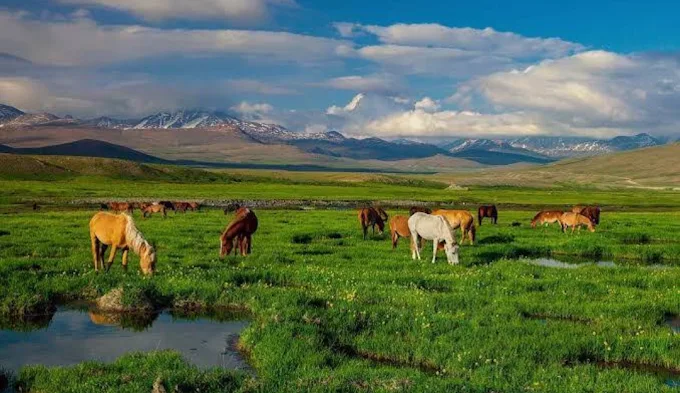
Deosai National Park is one of the major high-altitude destinations accessible from the Skardu region. Known for its broad alpine plains, wildlife and dramatic mountain environment, Deosai provides a completely different experience from the narrow valleys surrounding Skardu.
The park is especially associated with the conservation of the Himalayan brown bear and contains important high-altitude wetland ecosystems. The Government of Gilgit-Baltistan notes that Deosai National Park was designated in 1993 to protect the Himalayan brown bear.
Travel conditions to Deosai depend heavily on season and weather. A Deosai excursion should therefore be planned with current local road and weather conditions in mind.
Shigar Valley is an important extension of a Skardu journey and serves as a gateway toward the great Karakoram mountain routes. It is located close to Skardu and combines agricultural landscapes, historic architecture and access toward the Braldu Valley.
Shigar Fort is one of the region's best-known heritage sites. The Government of Gilgit-Baltistan describes the fort as approximately 400 years old and notes its restoration and reuse as a heritage museum.
Travelers interested in culture and history can combine Shigar Fort with Skardu's Kharpocho Fort and Manthal Buddha Rock to create a broader Baltistan heritage experience.
Khaplu lies farther east from Skardu and is another important destination for travelers exploring Baltistan. The area is known for its mountain scenery, historic architecture, villages and cultural heritage.
A longer Skardu itinerary can therefore extend beyond the immediate valley to include Khaplu and other parts of Baltistan.
Adventure Touristik's existing 12 Days Hunza & Skardu Valley Tour includes Skardu, Shigar and Khaplu as part of a wider northern Pakistan itinerary.
Skardu has a special place in the world of mountaineering because many expeditions toward K2 and other major Karakoram peaks use Skardu as their logistical base.
The traditional approach toward K2 travels from Skardu through Shigar and onward toward Askole, the Baltoro Glacier and Concordia. The Government of Gilgit-Baltistan identifies Skardu as the gateway and operational base for the K2 route.
This makes Skardu more than a sightseeing destination. It is also the starting point for some of the world's most demanding trekking and mountaineering journeys, including routes toward K2 Base Camp, Broad Peak and the Baltoro region.
There is no single way to experience Skardu. Some visitors come for lakes and photography, others for history and culture, while trekkers use the city as a gateway to the Karakoram.
Explore one of Skardu's most important historical landmarks and enjoy panoramic views from the hill above the town.
Visit Upper Kachura Lake and Lower Kachura Lake for mountain scenery, photography and boating opportunities where available.
Enjoy the peaceful scenery around Lower Kachura Lake and the famous Shangrila area.
Experience one of the world's most unusual mountain deserts, where sandy terrain meets the high peaks of the Karakoram.
Add Satpara Lake to a Skardu sightseeing route for another perspective on the valley's mountain and water landscapes.
Discover one of the region's important archaeological and cultural landmarks.
Travel into Shigar for historic architecture, local culture and access toward the Karakoram's great trekking routes.
Experience high-altitude plains, wildlife habitat and a landscape completely different from the valley floor.
Skardu is particularly attractive to travelers searching for adventure activities in Skardu. The official tourism department lists activities including fishing, boating, trekking, rock climbing, paragliding, skiing and mountain biking.
Skardu provides access to major trekking routes in the Central Karakoram, from shorter valley hikes to demanding glacier and high-altitude journeys.
The Skardu–Shigar–Askole route is the traditional gateway toward the Baltoro Glacier, Concordia and K2 Base Camp.
Boating is available at selected lake destinations, subject to local operating conditions and weather.
Skardu is exceptionally well suited to landscape photography because of its combination of lakes, deserts, mountain peaks, historic architecture and changing light.
Depending on the season and route, visitors can also plan mountain biking, rock climbing, fishing and other outdoor experiences.
Skardu is also a cultural destination. The region's Balti heritage can be experienced through traditional food, architecture, language, music, festivals, handicrafts and everyday village life.
Balti is the principal local language of the Skardu region, while Urdu and English are also widely used in tourism and everyday communication.
Travelers can make their journey more meaningful by spending time in local markets, visiting heritage sites, trying traditional Balti dishes and engaging respectfully with communities.
The best time to visit Skardu depends on your interests. Spring is attractive for blossoms and fresh landscapes, summer is generally popular for sightseeing and mountain travel, autumn brings warm colors and clear photography conditions, while winter transforms the region with snow and colder mountain conditions.
Mountain roads and high-altitude destinations can be affected by weather. Before traveling, check current road conditions, local weather and the operational status of specific attractions.
Spring brings a gradual return of greenery and blossoms to the lower valleys. It is a rewarding season for travelers interested in photography, culture and quieter sightseeing.
Summer is one of the most popular seasons for exploring Skardu and the surrounding mountain destinations. Many high-altitude routes become more accessible, making this an important season for trekking, Deosai trips and Karakoram expeditions.
Autumn can be particularly beautiful for photographers. Trees and agricultural areas develop golden and warm colors while the surrounding mountains provide a dramatic backdrop.
Winter offers a completely different Skardu experience, with snow-covered landscapes, cold temperatures and a quieter tourism atmosphere. However, travelers should be prepared for winter conditions and possible travel disruptions caused by snow and weather.
Skardu can be reached by road or by air. The best option depends on your schedule, budget, weather conditions and preference for scenic travel.
A road journey to Skardu is a major part of the northern Pakistan travel experience. The route passes through dramatic mountain landscapes and connects Skardu with the wider road network of Gilgit-Baltistan.
Travelers arriving from Islamabad commonly travel north through the major mountain corridors before continuing toward Skardu. Road journeys require flexibility because mountain weather, road conditions and seasonal closures can affect travel times.
Flying can significantly reduce travel time compared with a long road journey when flights are operating. However, mountain weather can affect flight schedules, so travelers should avoid building an itinerary with extremely tight connections.
For international visitors, it is wise to keep some flexibility between the Skardu flight and major trekking or tour departures.
A short Skardu visit can cover the main attractions in approximately three to four days, while five to seven days provides more time for lakes, deserts, cultural sites and nearby valleys.
Travelers planning Deosai, Shigar, Khaplu or longer trekking journeys should allow additional time.
For a combined Hunza and Skardu journey, a longer itinerary provides a better opportunity to experience both regions without rushing between major attractions.
The following example provides a flexible framework for a first Skardu visit. Exact travel times should be adjusted according to weather, road conditions and the attractions available during your travel season.
Arrive in Skardu, check into your accommodation and allow time to rest after the journey. If conditions permit, enjoy a relaxed introduction to the town and surrounding landscape.
Explore the historical side of Skardu with Kharpocho Fort and Manthal Buddha Rock, followed by time in the local town and markets.
Visit Upper Kachura Lake and Lower Kachura Lake. Spend time photographing the lakes and surrounding mountains.
Explore the unusual landscape of Katpana Cold Desert and continue toward Satpara Lake depending on road and weather conditions.
Use an additional day for Shigar Valley and Shigar Fort, or plan a Deosai excursion when seasonal access and weather conditions allow.
A well-designed Skardu Valley tour should combine natural attractions, cultural heritage and enough time to enjoy the landscape rather than simply moving from one viewpoint to another.
Adventure Touristik's 12 Days Hunza & Skardu Valley Tour combines Skardu with Hunza and includes attractions such as Shigar Fort, Khaplu Fort, Upper and Lower Kachura Lakes, Manthokha Waterfall, Attabad Lake, Passu Cones and Khunjerab Pass.
Combining Hunza and Skardu is one of the best ways to experience the diversity of northern Pakistan. The two destinations offer distinctly different landscapes and cultural experiences.
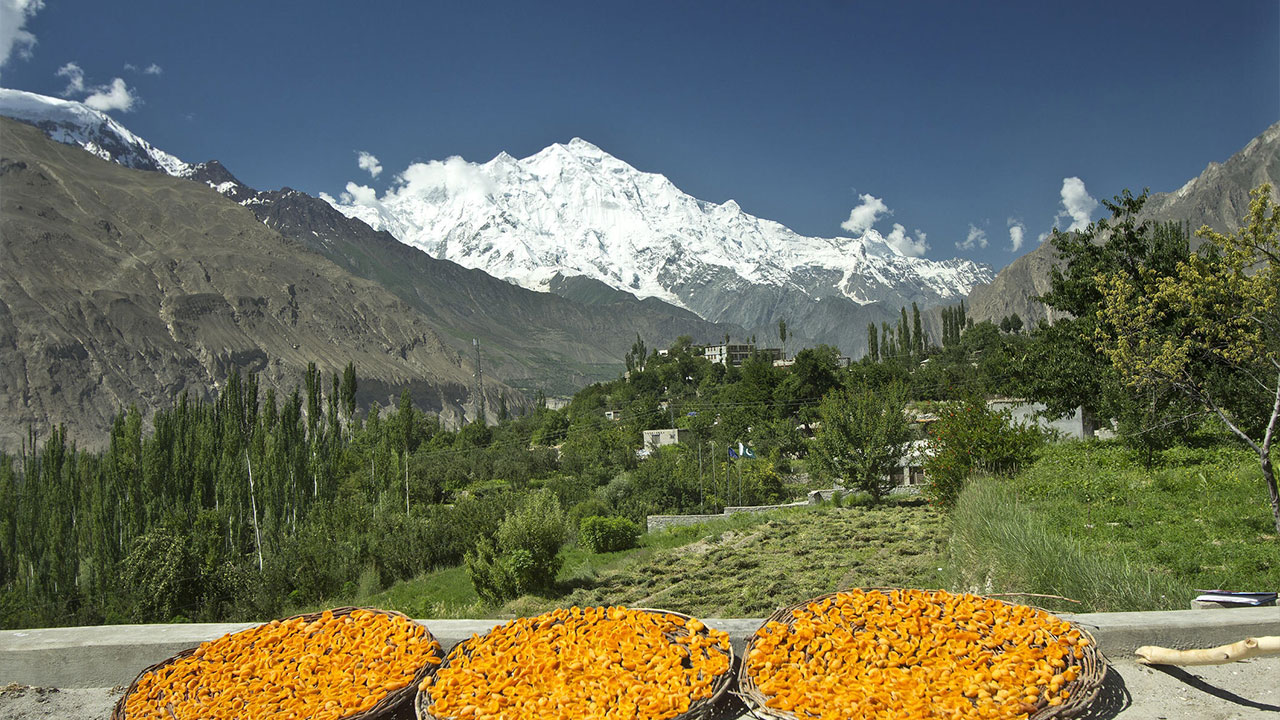
Hunza is known for historic forts, orchards, dramatic Karakoram scenery and destinations such as Attabad Lake and Passu. Skardu adds cold deserts, alpine lakes, Baltistan heritage, Deosai and access to the K2 region.
Adventure Touristik's existing 12 Days Hunza & Skardu Valley Tour is designed around this combination.
Skardu works best as part of a wider northern Pakistan travel plan. Depending on your route and available time, you can combine it with other major destinations across Gilgit-Baltistan.
Explore the Ghizar Valley for a different mountain landscape featuring Phander, Gupis, Yasin and the Ghizer River.
You can also explore the Attabad Lake in Upper Hunza, particularly if you are planning a longer Hunza and Skardu itinerary.
Weather can change quickly in the mountains. Check local conditions before traveling to high-altitude destinations and allow flexibility in your itinerary.
Road journeys in northern Pakistan can take longer than expected because of terrain, traffic, road conditions and weather.
Outside the main town, services can become limited. Carry essential medicines, personal supplies, appropriate clothing and some cash for smaller local expenses.
Even during warmer months, temperatures can drop significantly after sunset and at higher elevations. Layered clothing is useful throughout a Skardu journey.
Skardu is home to a rich Balti cultural heritage. Travelers should respect local customs, religious sites, private property and photography preferences.
Protect the fragile mountain environment by avoiding litter, minimizing plastic waste, respecting wildlife and following local guidance in protected areas.
Skardu is famous for its dramatic Karakoram scenery, Kachura Lakes, Katpana Cold Desert, Kharpocho Fort, Deosai National Park and its role as a gateway to K2 and major trekking and mountaineering routes.
Skardu Valley is located in the Baltistan region of Gilgit-Baltistan in northern Pakistan. Skardu town serves as the main tourism and logistical center for the surrounding region.
Skardu has a long history connected with the wider history of Baltistan and the Maqpon dynasty. Kharpocho Fort is one of the most important surviving monuments associated with the historical rulers of Skardu.
Major attractions include Kharpocho Fort, Manthal Buddha Rock, Upper Kachura Lake, Lower Kachura Lake and Shangrila, Satpara Lake, Katpana Cold Desert, Shigar Valley, Shigar Fort and Deosai National Park.
Both are worth visiting. Upper Kachura is known for its dramatic natural setting and clear mountain water, while Lower Kachura is closely associated with Shangrila and offers a more developed tourism environment. Including both in the same itinerary is ideal when time allows.
Katpana is a high-altitude desert landscape located near Skardu. Its sandy terrain and cold mountain climate create the unusual combination that makes it known as a cold desert.
Yes. Skardu is the main logistical gateway for the traditional K2 approach through Shigar, Askole, the Baltoro Glacier and Concordia. The Government of Gilgit-Baltistan identifies Skardu as the gateway and operational base for the K2 route.
Yes. Deosai is commonly visited as an excursion from the Skardu region when seasonal access and weather conditions permit. Because Deosai is a high-altitude environment, road conditions should be checked before travel.
Spring, summer and autumn are popular seasons for different types of Skardu travel. Summer is particularly important for trekking and high-altitude travel, while spring and autumn offer excellent conditions for scenery and photography. Winter provides a snowy experience but requires greater preparation for cold and possible travel disruption.
Three to four days can cover many major attractions, while five to seven days gives travelers more time for lakes, deserts, historical sites and nearby valleys. Longer stays are recommended for Deosai excursions, extended cultural travel or trekking.
Yes. A combined Hunza and Skardu itinerary is one of the best ways to experience northern Pakistan. The two regions offer different landscapes and attractions and can be connected through a multi-day private or group tour.
Depending on the season and location, visitors can enjoy trekking, boating, fishing, mountain biking, rock climbing, photography and other mountain activities. Skardu is also the gateway for major Karakoram trekking and mountaineering expeditions.
Yes. Adventure Touristik offers northern Pakistan itineraries that include Skardu and can arrange customized journeys according to travel dates, group size, interests and route preferences.
Skardu is more than a scenic mountain destination. It is a place where Balti culture, historic kingdoms, high-altitude deserts, turquoise lakes and some of the world's greatest mountains meet.
Whether your goal is to photograph the Skardu Valley, explore the history of Skardu, visit Kachura Lakes, experience the Katpana Cold Desert, explore Deosai or begin a journey toward K2, Skardu offers a remarkable base for discovering Baltistan and the wider Karakoram.
For a carefully planned journey through Skardu, Hunza and the mountains of northern Pakistan, explore Adventure Touristik's 12 Days Hunza & Skardu Valley Tour or request a customized itinerary designed around your interests, travel dates and group size.
FEATURED ARTICLE
Explore the spectacular Skardu Valley, where dramatic Karakoram mountains, turquoise lakes, cold deserts and historic landmarks create one of the most remarkable destinations in northern Pakistan. Discover Kharpocho Fort, Upper Kachura Lake, Shangrila, Satpara Lake, Katpana Cold Desert and the cultural heritage of Baltistan on a carefully planned Skardu journey.
FEATURED ARTICLE
Experience two of northern Pakistan's most spectacular destinations on a combined Hunza and Skardu tour. Explore Attabad Lake, Passu Cones and the historic attractions of Hunza before continuing to Skardu, Kachura Lakes, Shigar, Khaplu and the dramatic landscapes of Baltistan.
FEATURED ARTICLE
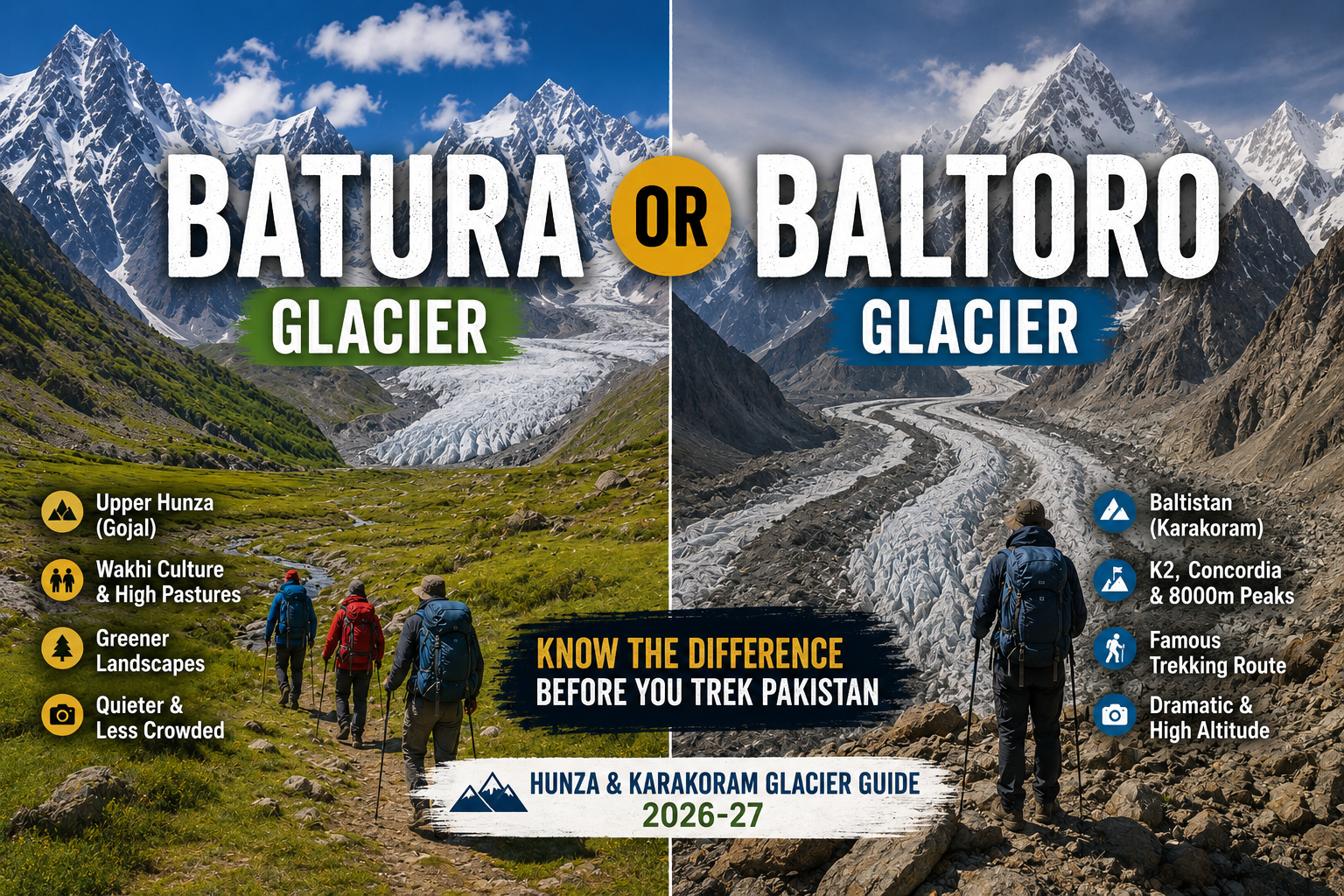
Begin an unforgettable Karakoram adventure from Skardu, the traditional gateway to the Baltoro Glacier, Concordia and K2. The journey takes trekkers deep into one of the world's greatest mountain landscapes, surrounded by legendary peaks including K2, Broad Peak and the Gasherbrum massif.
FEATURED ARTICLE
Discover Deosai National Park, one of the world's highest plateaus and a spectacular wilderness destination accessible from the Skardu region. Explore vast alpine landscapes, high-altitude lakes and important Himalayan wildlife habitat while experiencing a completely different side of Gilgit-Baltistan.
FEATURED ARTICLE
Travel from Skardu into Shigar Valley to discover one of Baltistan's most important cultural landscapes. Visit historic Shigar Fort, explore traditional villages and experience the heritage of a valley that also serves as an important gateway toward the Baltoro Glacier and the high Karakoram.
Thoughtful thoughts to your inbox
Book your Pakistan tour with confidence using our trusted international and regional payment options.
Follow us @AdvTouristik
Copyright © 2026 Adventure Touristik Pvt Ltd®. All Rights Reserved.

