Support
Secure Payment Methods
Book your Pakistan tour with confidence using our trusted international and regional payment options.




Start and end in Multan! Known as the City of Saints, Multan is one of Pakistan's most distinctive cultural destinations, shaped by centuries of history, Sufi traditions, Islamic architecture, traditional crafts and vibrant local life. With the soulful heritage experience Mystical Multan, travelers can discover a city where spiritual heritage and everyday Punjabi culture remain closely connected.
Multan is one of the oldest cities in South Asia and has long been an important center of trade, learning and religious life. Its historic heart is filled with shrines, tombs, mosques, bazaars and traditional neighborhoods, while local crafts and food give the city a character that is distinctly its own.
For travelers exploring Pakistan beyond the country's famous northern mountains, Multan offers a different kind of experience. It is a destination for history lovers, cultural travelers, photographers, food enthusiasts and anyone interested in the spiritual traditions of Punjab.
Multan is worth visiting because its heritage is still part of everyday life. The city does not feel like a museum preserved behind glass. Its shrines continue to attract worshippers, its bazaars remain active, and traditional crafts are still produced and sold locally.
The city's strongest attraction is its combination of spiritual and cultural heritage. Historic tombs and mosques stand alongside busy markets, traditional workshops and food streets, creating a travel experience that is both deeply historical and very much alive.
Multan also works well as part of a wider journey through Pakistan. It can be combined with Lahore for a Punjab heritage itinerary or included in a broader Pakistan tour.
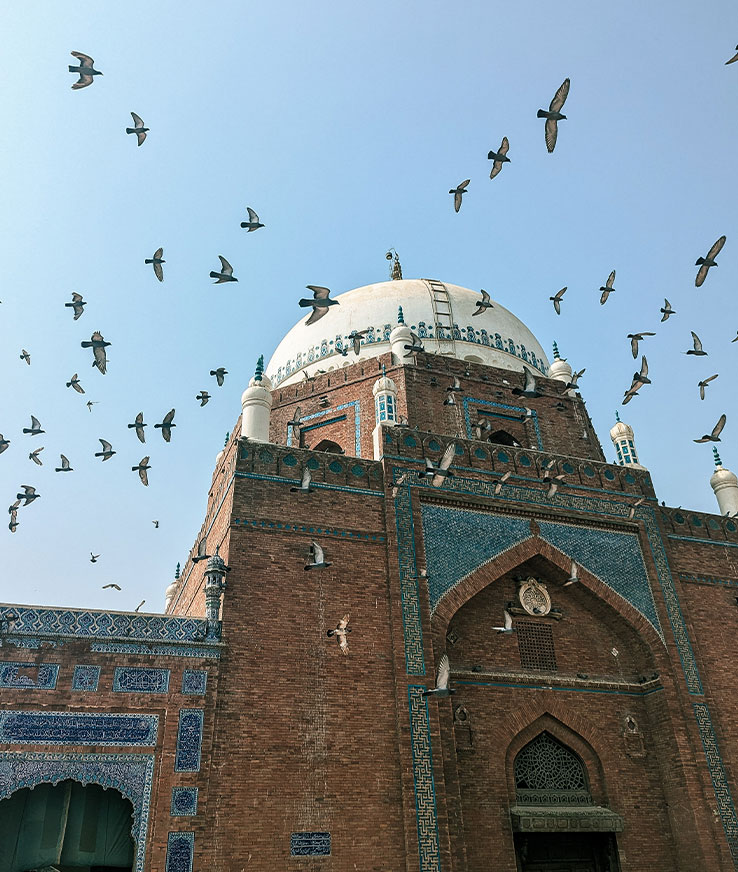
The Shrine of Shah Rukn-e-Alam is one of Multan's most recognizable landmarks and an important center of Sufi heritage. Its distinctive dome and historic architecture dominate the old city skyline and make the shrine an essential stop for visitors interested in the religious and cultural history of Multan.
The shrine is also an active religious site. Visitors should dress respectfully, follow local customs and ask before photographing people or religious activities.
The Shrine of Bahauddin Zakariya is another major spiritual landmark in Multan. Bahauddin Zakariya played an important role in the development of the Suhrawardi Sufi tradition in the region, and his shrine remains an important place of pilgrimage.
Visiting both major shrines provides a useful introduction to the spiritual traditions that helped shape Multan's identity over many centuries.
The historic fort area is closely associated with Multan's old city and offers an opportunity to understand the strategic importance of the settlement. Although much of the original fort structure has disappeared or changed over time, the remaining historic landscape and elevated position provide an important connection to the city's past.
The area around the fort is particularly interesting when combined with visits to the nearby shrines and old markets.
Ghanta Ghar, or the Clock Tower, is one of Multan's recognizable historic landmarks and an important reference point in the city center. The surrounding area provides access to busy commercial streets and offers visitors a glimpse of modern Multan alongside its historic core.
Hussain Agahi Bazaar is one of the best places to experience the commercial side of old Multan. Shops and stalls offer traditional clothing, handicrafts, pottery, sweets, spices and everyday goods.
A walk through the bazaar is less about visiting a single monument and more about experiencing the rhythm of local life. Travelers interested in photography and cultural experiences can find plenty to observe, although it is always important to respect people's privacy.
Multan Museum provides additional context for understanding the history, archaeology and cultural heritage of the region. A museum visit can complement sightseeing around the old city by helping travelers connect the city's monuments and traditions with the wider history of southern Punjab.
The historic Eidgah Mosque is another important architectural site in Multan. Its large scale and traditional Islamic design contribute to the city's distinctive religious and architectural landscape.
Multan's reputation as the City of Saints comes from its long association with Sufi scholars, saints and spiritual traditions. The shrines of Shah Rukn-e-Alam and Bahauddin Zakariya are central to this identity, but the city's spiritual heritage extends well beyond individual monuments.
Sufi traditions have influenced the culture, poetry, music, architecture and social life of the region for centuries. For visitors, this makes Multan particularly valuable as a destination where religious heritage can be experienced in a living cultural setting.
When visiting shrines and other religious places, travelers should be mindful that these are active sacred spaces rather than conventional tourist attractions. Modest clothing, respectful behavior and sensitivity toward worshippers are important.
Multan's history stretches back many centuries, and its location in southern Punjab helped make it an important crossroads for trade, migration and cultural exchange.
The city's architecture reflects this long history. Historic tombs, mosques, gateways, fortifications and traditional buildings reveal different chapters of Multan's past, while the modern city continues to grow around them.
One of the most striking features of Multani architecture is the use of decorative tilework and geometric patterns. Blue and turquoise tones are particularly associated with the city's traditional architectural and craft traditions.
Exploring Multan on foot, especially around its historic core, allows travelers to see how old monuments and contemporary city life exist side by side.
Multan is well known for its traditional crafts, particularly its distinctive blue pottery and decorative tilework. Local artisans have developed techniques and designs that have become closely associated with the city's cultural identity.
Visitors can explore traditional markets for pottery, handicrafts, textiles, embroidered goods and other locally produced items. Purchasing directly from local shops and artisans can be a meaningful way to support the continuation of traditional craftsmanship.
The old bazaars are also part of the experience themselves. Their narrow streets, colorful displays and busy atmosphere provide a different perspective on Multan beyond its major historic monuments.
Food is another important part of experiencing Multan. The city's culinary traditions reflect the wider flavors of Punjab while retaining local specialties and sweets that have become closely associated with Multan.
One of the city's best-known specialties is Multani sohan halwa, a rich traditional sweet that is widely associated with the city. It is commonly purchased as a gift or souvenir and is worth trying during a visit.
Travelers can also explore traditional Pakistani meals, breads, grilled dishes, curries and snacks at local restaurants and markets. A food experience adds another layer to a cultural visit because local cuisine is closely connected with family traditions and regional identity.
The cooler months are generally the most comfortable time to explore Multan. From autumn through early spring, temperatures are more suitable for walking tours, visiting historic sites and spending time in the old city.
Multan can become extremely hot during summer, particularly in the middle of the day. Travelers visiting during warmer months should plan outdoor sightseeing for the morning or later afternoon, stay hydrated and allow time for indoor breaks.
If Multan is part of a longer Pakistan itinerary, the season should also be considered in relation to the other destinations you plan to visit. The climate of Punjab can be very different from the high-altitude regions of northern Pakistan.
A full day can cover several of Multan's major historic attractions, especially the principal shrines, fort area and old bazaars.
Two days provide a more comfortable experience. You can explore the major heritage sites without rushing, spend more time in the markets, enjoy local food and visit additional cultural attractions.
Travelers with more time can use Multan as part of a wider South Punjab itinerary or combine it with Lahore and Karachi as part of a multi-city cultural journey through Pakistan.
Multan is an excellent stop for travelers interested in exploring the cultural diversity of southern and central Pakistan. Its Sufi heritage provides a strong contrast with Lahore's Mughal and colonial history and Karachi's coastal, commercial and multicultural character.
Adventure Touristik currently features a South Pakistan – Karachi – Multan – Lahore experience, making it possible to connect these major cities within one broader cultural journey. You can explore the available Pakistan tour options and choose an itinerary that fits your travel dates and interests.
Combining Multan and Lahore creates a particularly interesting Punjab heritage journey. Multan introduces travelers to Sufi traditions, historic shrines, traditional crafts and the old city, while Lahore offers Mughal monuments, colonial architecture, museums and one of Pakistan's most famous food cultures.
After experiencing the spiritual atmosphere of Multan, continue north toward Lahore to explore the city's Walled City, Lahore Fort, Badshahi Mosque and other historic landmarks.
Multan and Karachi offer two very different perspectives on Pakistan. Multan is strongly associated with spiritual heritage, historic architecture and traditional crafts, while Karachi is a vast coastal metropolis shaped by trade, migration and diverse communities.
Travelers who want to experience this contrast can continue from Multan toward Karachi and explore the city's historic districts, museums, markets and Arabian Sea coastline.
Before visiting Multan, consider the season, the amount of time you have and the type of experience you want. A heritage-focused trip should allow enough time for the old city, shrines, markets and local food rather than trying to see every attraction in a single rushed day.
International travelers can also combine Multan with a larger Pakistan itinerary. Adventure Touristik offers customized travel planning for travelers who want to connect cultural cities with historic sites, mountain destinations and other regions of Pakistan.
If you need travel documentation for your Pakistan journey, you can also learn more about the Pakistan Letter of Invitation service.
Multan's most important attractions include active religious and community spaces. Responsible travel therefore begins with respect for local customs and the people who live and worship in these places.
Yes. Multan is one of Pakistan's most distinctive cultural destinations, especially for travelers interested in Sufi heritage, historic architecture, traditional crafts, bazaars and local food.
Multan is known as the City of Saints because of its long association with Sufi scholars and saints. The historic shrines of Shah Rukn-e-Alam and Bahauddin Zakariya are central to the city's spiritual identity.
Important places include the Shrine of Shah Rukn-e-Alam, Shrine of Bahauddin Zakariya, Multan Fort area, Ghanta Ghar, Hussain Agahi Bazaar, Multan Museum and Eidgah Mosque.
Multan is famous for its Sufi shrines, historic architecture, blue pottery, traditional handicrafts, bazaars and local sweets, particularly sohan halwa.
Multan is particularly famous for sohan halwa, a traditional sweet associated with the city. Visitors can also enjoy a range of Punjabi and Pakistani dishes, including curries, grilled foods, breads and local snacks.
The cooler months are generally more comfortable for sightseeing in Multan. Autumn, winter and early spring are better suited to walking through the old city and visiting outdoor heritage sites.
One day can cover the main highlights, but two days allow travelers to explore the historic center at a more relaxed pace, spend time in the bazaars and enjoy local food and cultural experiences.
Yes. Multan, Lahore and Karachi make an interesting multi-city cultural itinerary. Together they provide very different experiences of Pakistan, from Sufi heritage and historic Punjab to Mughal architecture and the diverse coastal culture of Karachi.
Multan is only one part of Pakistan's cultural landscape. Continue your journey toward Lahore and Karachi, or explore the wider range of destinations and experiences available through Adventure Touristik.
Whether you are drawn to Multan by its Sufi heritage, historic shrines, traditional crafts, old bazaars or famous food, the city offers an authentic cultural experience in the heart of Punjab.
Explore Multan as a standalone heritage destination or include it in a wider journey through Pakistan. Adventure Touristik can help you connect Multan with Lahore, Karachi and other destinations according to your interests, schedule and travel style.
Explore Pakistan Tours and start planning your journey with Adventure Touristik.
FEATURED ARTICLE
Explore the spiritual heart of Multan through its historic Sufi shrines, old city streets, traditional bazaars, blue pottery, Islamic architecture and famous local sweets. Mystical Multan is designed for travelers who want to experience the city's history and living cultural traditions.
FEATURED ARTICLE
Connect three very different Pakistani cities in one cultural journey. Discover Multan's Sufi heritage, Lahore's Mughal history and Karachi's diverse coastal and urban culture while traveling through the historic heart of Pakistan.
FEATURED ARTICLE
Begin with the shrines, bazaars and traditional crafts of Multan before continuing to Lahore for its Mughal monuments, historic Walled City, museums and famous food culture.
FEATURED ARTICLE
Experience the cultural diversity of southern and central Pakistan by connecting Multan's Sufi heritage with the historic streets, museums, markets and coastal atmosphere of Karachi.
受信トレイへの思いやりのある考え
Book your Pakistan tour with confidence using our trusted international and regional payment options.
Follow us @AdvTouristik
Copyright © 2026 Adventure Touristik Pvt Ltd®. All Rights Reserved.

