Pakistan Silk Road Cultural Heritage: Where Ancient Civilizations Meet Modern Travelers
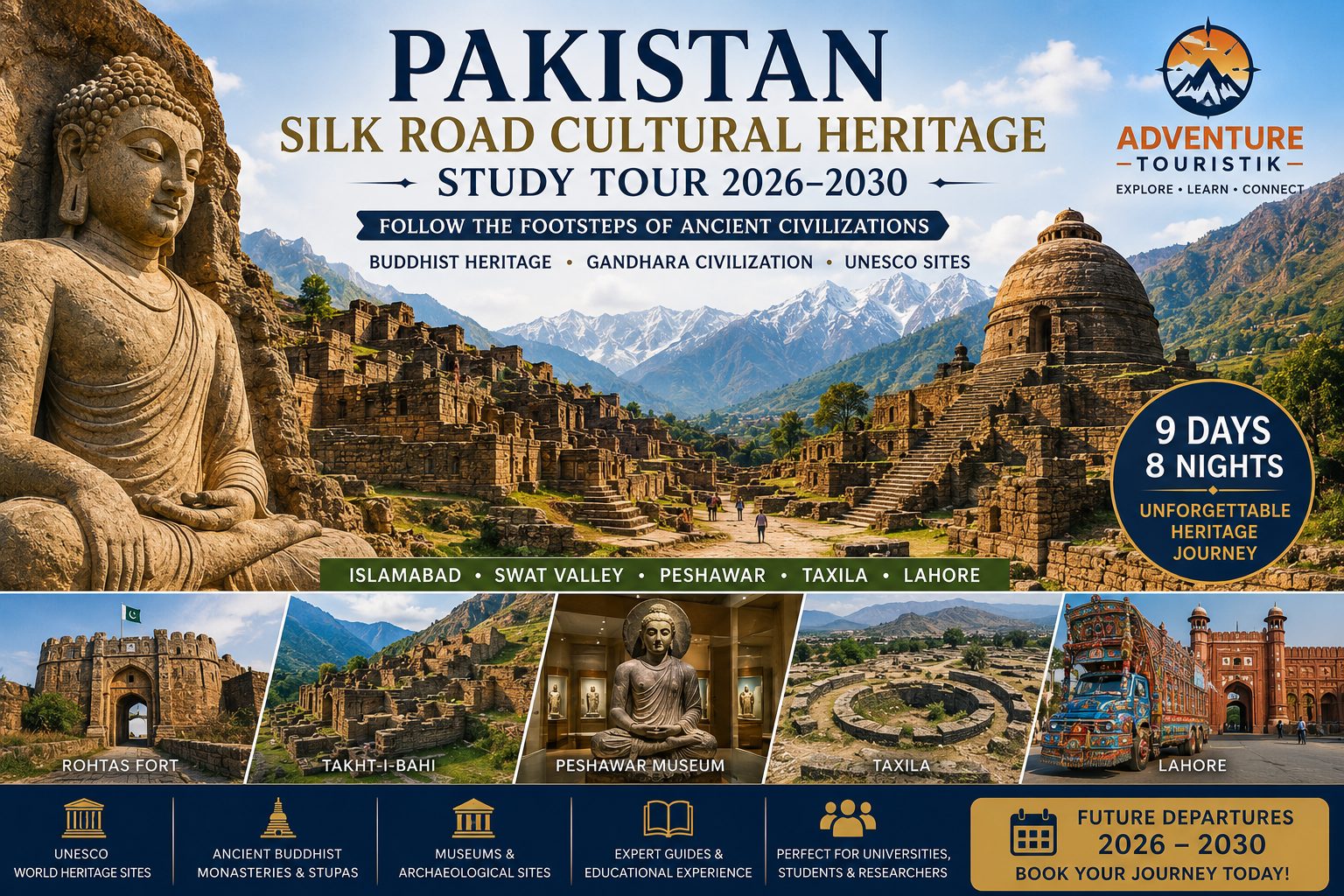
For thousands of years, the legendary Silk Road connected East Asia with Central Asia, the Middle East, and Europe. While many travelers associate the Silk Road with China, Uzbekistan, or Kyrgyzstan, few realize that Pakistan was one of its most important cultural crossroads. Today, Pakistan preserves some of the world's most remarkable Buddhist archaeological sites, Gandhara sculptures, and ancient learning centers, making it an exceptional destination for cultural tourism, educational travel, and heritage exploration.
From Takht-i-Bahi and Taxila to Swat Valley and Peshawar, Pakistan offers a unique opportunity to walk through history and experience the legacy of civilizations that shaped Asia. Whether you are a historian, Buddhist pilgrim, student, researcher, photographer, or curious traveler, the Pakistan Silk Road Cultural Heritage Tour offers an unforgettable journey into one of humanity's greatest cultural landscapes.
The Importance of Pakistan on the Ancient Silk Road
The Silk Road was far more than a trade route for silk and spices. It was a network that facilitated the exchange of ideas, religions, art, science, and technology across continents. Ancient Pakistan played a central role in this exchange, especially during the flourishing of the Gandhara Civilization.
Merchants, monks, scholars, and travelers passed through the valleys of present-day Pakistan, spreading Buddhism from South Asia toward Central Asia and China. This interaction gave rise to one of history's most influential artistic traditions, blending Greek, Persian, and Indian influences into the famous Gandhara style of Buddhist sculpture.
Today, visitors can still explore monasteries, stupas, universities, museums, and archaeological sites that tell the story of this extraordinary era.
Taxila: One of the World's Oldest Centers of Learning
Among Pakistan's most celebrated archaeological destinations is Taxila, a UNESCO World Heritage Site recognized for its exceptional historical significance.
More than two thousand years ago, Taxila was a thriving center of education where students from across Asia studied philosophy, medicine, politics, military science, and Buddhism. The city became one of the ancient world's greatest intellectual hubs long before many famous medieval universities were established.
Modern visitors can explore:
-
Taxila Museum
-
Jaulian Monastery
-
Mohra Moradu Monastery
-
Sirkap Ancient City
-
Dharmarajika Stupa
-
Ancient residential quarters
-
Excavated temples and monasteries
Each site provides remarkable insight into the daily life, architecture, and educational traditions of the Gandhara Civilization.
Swat Valley: The Cradle of Buddhist Heritage
Often called the "Switzerland of Pakistan" for its breathtaking mountain scenery, Swat Valley was once one of Buddhism's most important spiritual centers.
Between the 2nd century BCE and the 7th century CE, hundreds of monasteries and temples were built throughout the valley. Today, many of these treasures remain accessible to travelers.
Highlights include:
Takht-i-Bahi
This UNESCO World Heritage Site is among the best-preserved Buddhist monasteries in South Asia. Its hilltop location offers spectacular views while revealing how monks once lived and studied.
Butkara Stupa
One of Pakistan's oldest Buddhist monuments, showcasing centuries of architectural development.
Jahanabad Buddha
A magnificent Buddha carved directly into a mountainside, symbolizing the artistic excellence of Gandhara civilization.
Ghaligai Buddha
An impressive rock carving reflecting the spread of Buddhist culture throughout the Swat region.
Swat Museum
The museum houses one of the world's richest collections of Gandhara sculptures, coins, manuscripts, and archaeological discoveries.
Peshawar: Gateway Between Civilizations
One of the world's oldest continuously inhabited cities, Peshawar has served as a major commercial and cultural hub for centuries.
Travelers exploring Pakistan's Silk Road heritage should not miss:
-
Peshawar Museum
-
University of Peshawar Museum
-
Sethi House Museum
-
Historic bazaars
-
Traditional handicrafts
-
Gandhara artifacts
These institutions preserve thousands of archaeological objects that document Pakistan's central role in the spread of Buddhism and international trade.
UNESCO World Heritage Sites Worth Visiting
Pakistan is home to several UNESCO World Heritage Sites connected to the Silk Road and ancient civilizations.
Some of the most important include:
-
Taxila
-
Takht-i-Bahi
-
Rohtas Fort
-
Lahore Fort
-
Shalimar Gardens
These destinations offer visitors a comprehensive understanding of Pakistan's diverse cultural history.
Why Cultural Tourism in Pakistan Is Growing
International interest in Pakistan has grown significantly in recent years due to improved infrastructure, increased safety, and expanding tourism services.
Travelers are discovering that Pakistan offers:
-
Authentic cultural experiences
-
World-class archaeological sites
-
Friendly local communities
-
Stunning mountain landscapes
-
Rich Buddhist heritage
-
Affordable travel
-
Professional tour services
-
Unique educational opportunities
Unlike crowded heritage destinations elsewhere, many of Pakistan's historical sites remain peaceful, allowing visitors to enjoy meaningful and immersive experiences.
Educational Tours for Universities and Research Institutions
Educational travel has become increasingly popular among universities, museums, and research organizations seeking field-based learning experiences.
Pakistan's Silk Road destinations provide ideal opportunities for:
-
Archaeological field studies
-
History programs
-
Religious studies
-
Museum research
-
Cultural exchange
-
Heritage conservation education
-
Photography workshops
-
International academic collaboration
Guided educational tours combine classroom learning with real-world exploration of some of Asia's most significant archaeological sites.
Best Time to Visit Pakistan's Silk Road
The best months for cultural travel are:
-
March
-
April
-
May
-
September
-
October
-
November
During these seasons, temperatures are pleasant for sightseeing, museum visits, archaeological exploration, and photography.
Responsible Heritage Tourism
When visiting archaeological and religious sites, responsible tourism helps preserve these treasures for future generations.
Visitors should:
-
Respect local customs.
-
Avoid touching ancient carvings.
-
Follow photography guidelines where applicable.
-
Dispose of waste responsibly.
-
Support local guides and communities.
-
Help protect Pakistan's cultural heritage.
Sustainable tourism ensures that these remarkable monuments continue inspiring future generations.
Experience Pakistan's Living History with Adventure Touristik
Adventure Touristik specializes in professionally organized cultural, educational, and heritage tours across Pakistan. Our Silk Road Cultural Heritage programs are designed for travelers who seek more than sightseeing—they offer meaningful engagement with the country's history, archaeology, and living traditions.
Whether you are planning a university study trip, a Buddhist pilgrimage, or a cultural holiday, our experienced team provides expert guides, comfortable accommodations, private transportation, and carefully planned itineraries that showcase the very best of Pakistan's Silk Road heritage.
Join us between 2026 and 2030 to explore one of the world's most fascinating cultural landscapes and discover why Pakistan is becoming one of Asia's leading destinations for heritage tourism.
Conclusion
Pakistan's Silk Road is more than an ancient trade route—it is a journey through civilizations, religions, art, and human achievement. From the monasteries of Swat to the academic legacy of Taxila and the vibrant history of Peshawar, every destination tells a story that has shaped Asia for centuries.
If you are looking for a destination that combines history, culture, education, breathtaking scenery, and authentic hospitality, Pakistan deserves a place at the top of your travel list.
Let Adventure Touristik help you uncover the remarkable heritage of the Silk Road and create memories that will last a lifetime.