Things to Do in Skardu: Best Places, Attractions, Activities & Travel Guide
Looking for the best things to do in Skardu? Skardu Valley is one of the most extraordinary destinations in northern Pakistan, where turquoise mountain lakes, ancient forts, high-altitude deserts, green valleys and some of the world's highest peaks come together in a landscape unlike almost anywhere else.
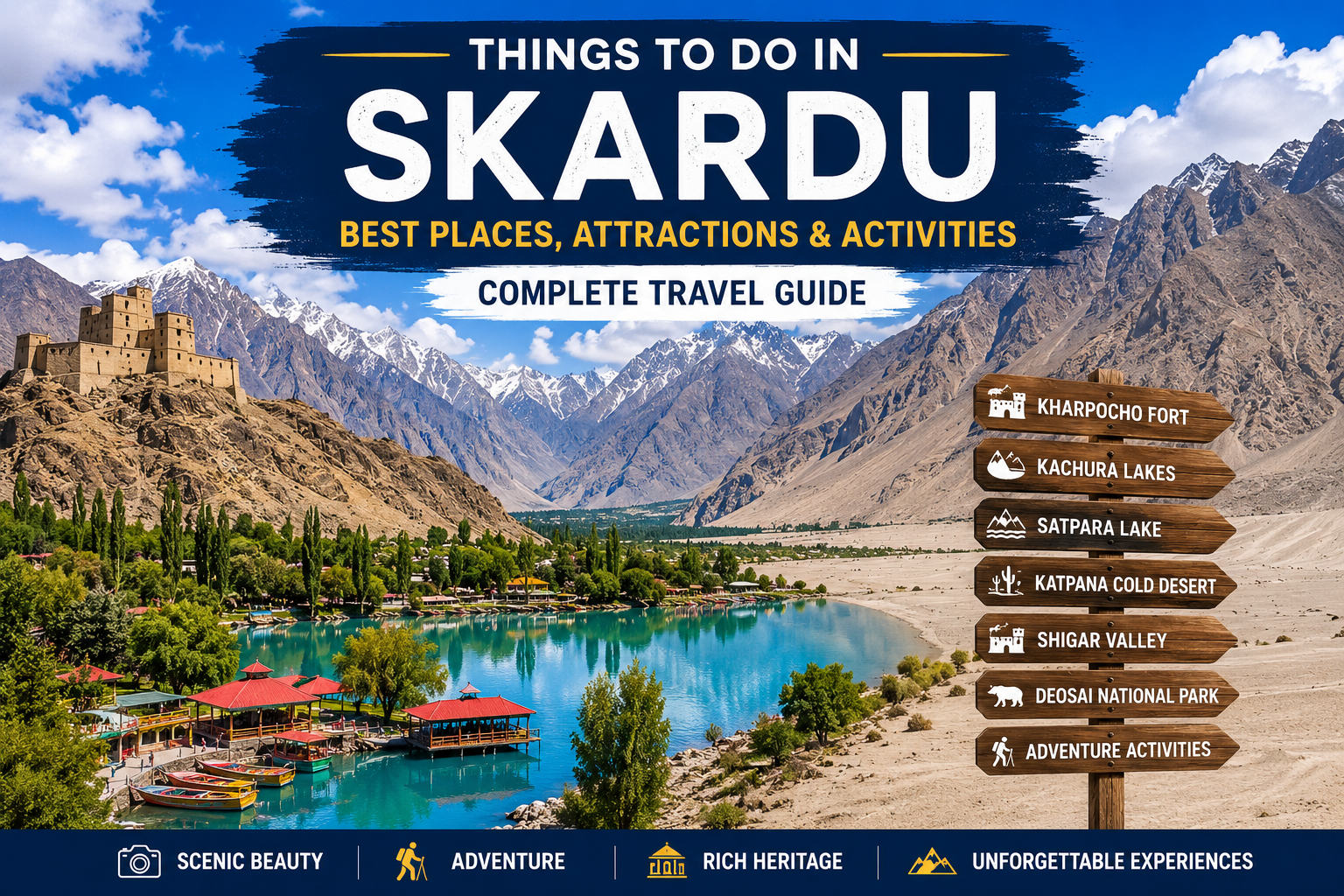
Located in Baltistan, Gilgit-Baltistan, Skardu is both a destination in its own right and an important gateway to the greater Karakoram. The region is known for Kharpocho Fort, Manthal Buddha Rock, Upper and Lower Kachura Lakes, Satpara Lake, Katpana Cold Desert, Shigar Valley and Deosai National Park. Skardu is also the traditional gateway for major journeys toward K2, the Baltoro Glacier and Concordia.
What makes Skardu tourism especially interesting is the variety of experiences available within one journey. You can explore centuries of history in the morning, take a boat ride on a mountain lake in the afternoon, photograph a cold desert at sunset and wake up the following day surrounded by some of the greatest peaks of the Karakoram.
This complete guide brings the major Skardu attractions, places to visit, adventure activities, cultural experiences and travel ideas together in one article. If you are planning your first trip, a family holiday, a photography journey, a road trip or a longer Karakoram adventure, use this guide to plan your Skardu itinerary.
Planning a complete Skardu trip? Start with our Skardu Valley Travel Guide for an overview of the destination, its history, major attractions, nearby valleys, travel seasons and routes.
Things to Do in Skardu Guide Outline
- Why Visit Skardu?
- Best Places to Visit in Skardu
- Visit Kharpocho Fort
- Explore Manthal Buddha Rock
- Visit Upper Kachura Lake
- Explore Lower Kachura Lake and Shangrila
- Visit Satpara Lake
- Explore Katpana Cold Desert
- Take a Trip to Deosai National Park
- Explore Shigar Valley and Shigar Fort
- Discover Khaplu and Eastern Baltistan
- Discover the History of Skardu
- Experience Balti Culture and Local Life
- Adventure Activities in Skardu
- Trekking and Hiking
- K2, Baltoro Glacier and Concordia
- Boating and Lake Experiences
- Photography in Skardu
- Other Outdoor Adventures
- Things to Do in Skardu for Families
- Skardu for Couples and Scenic Getaways
- Best Time to Visit Skardu
- How to Reach Skardu
- How Many Days Do You Need in Skardu?
- Suggested 5-Day Skardu Itinerary
- Combining Skardu with Hunza
- Skardu Travel Tips
- Quick Facts About Skardu
- Frequently Asked Questions
Why Visit Skardu?
Skardu offers an unusual combination of landscapes that can rarely be experienced within one destination. The valley sits among the mountains of Baltistan, with the Indus River and surrounding mountain valleys shaping the landscape.
Unlike greener mountain destinations where forests and orchards dominate the scenery, Skardu is characterized by dramatic rocky slopes, sandy terrain, alpine lakes and irrigated green areas. This contrast creates the distinctive character that makes Skardu Pakistan so attractive to travelers.
The Government of Gilgit-Baltistan Tourism Department lists Kharpocho Fort, Manthal Buddha Rock, Satpara and Kachura Lakes, Shangrila, Katpana Cold Desert and surrounding valleys among the region's major attractions. It also highlights trekking, fishing, boating, rock climbing, paragliding, skiing and mountain biking among activities available in the district.
Best Places to Visit in Skardu
The best places to visit in Skardu range from historical landmarks and cultural sites to lakes, deserts and high-altitude wilderness. You do not need to be an experienced trekker to enjoy the region. Many of the most famous attractions can be reached during a sightseeing tour by road.
If you are visiting for the first time, prioritize Kharpocho Fort, Manthal Buddha Rock, Upper Kachura Lake, Lower Kachura Lake and Shangrila, Satpara Lake and Katpana Cold Desert. With additional time, expand your journey toward Shigar, Khaplu or Deosai.
1. Visit Kharpocho Fort
Kharpocho Fort is one of the most important historical attractions in Skardu. Built on a rocky hill above the town, the fort overlooks the surrounding valley and provides an impressive perspective of Skardu's landscape.
The fort is strongly associated with the Maqpon rulers of Baltistan. The Government of Gilgit-Baltistan Tourism Department dates its construction to approximately 1490–1505 and identifies it as an important monument of the Maqpon period.
Visiting Kharpocho is one of the best things to do in Skardu if you want to combine history with scenery. The climb also provides a different view of the town, surrounding mountains and river landscape.
2. Explore Manthal Buddha Rock
Manthal Buddha Rock is one of Skardu's most significant archaeological and cultural sites. The rock carving reflects the Buddhist heritage of Baltistan and demonstrates the long history of cultural exchange across the mountains of northern Pakistan.
For visitors interested in history, archaeology and culture, Manthal Buddha Rock offers an important contrast to the modern image of Skardu as a trekking and adventure destination.
Combining Manthal Buddha Rock with Kharpocho Fort makes an excellent half-day cultural experience in Skardu.
3. Visit Upper Kachura Lake
Upper Kachura Lake is one of the most beautiful natural attractions around Skardu. Surrounded by rugged mountains, clear water and dramatic rock formations, the lake is especially popular with photographers and nature lovers.
The lake provides a peaceful setting away from the busier parts of town. Depending on local conditions, visitors may enjoy boating and spending time along the shoreline.
For many travelers, Upper Kachura is one of the highlights of a first Skardu Valley tour.
4. Explore Lower Kachura Lake and Shangrila
Lower Kachura Lake is widely known through the Shangrila tourism area. Its combination of water, vegetation and surrounding mountains creates a landscape that feels very different from the dry mountain slopes found elsewhere in Skardu.
Shangrila is particularly suitable for visitors who want to enjoy lake scenery without undertaking a demanding trek. It is also a popular stop for families, photographers and travelers looking for a relaxing part of their Skardu itinerary.
5. Visit Satpara Lake
Satpara Lake is another important destination near Skardu. The lake is surrounded by high mountain terrain and is part of the wider water and landscape system of the region.
Satpara is a good addition to a sightseeing itinerary because it can be combined with other nearby attractions while providing a different perspective on the mountains and waterways around Skardu.
6. Explore Katpana Cold Desert
One of the most unusual Skardu attractions is the Katpana Cold Desert. This high-altitude desert landscape features sandy terrain surrounded by the mountains of Baltistan.
The combination of sand, rugged mountains and snow-covered peaks creates one of the most recognizable landscapes in the region. The official Gilgit-Baltistan Tourism Department lists Katpana Cold Desert, also known as Nakpo Biama in Balti, among the major attractions of Skardu.
The desert is particularly rewarding around sunrise and sunset when low-angle light emphasizes the shapes of the dunes and mountain slopes.
7. Take a Trip to Deosai National Park
Deosai National Park offers a completely different experience from Skardu's lakes and deserts. The enormous high-altitude plateau is known for broad alpine landscapes, seasonal wildflowers, lakes, streams and wildlife habitat.
Deosai is especially associated with the conservation of the Himalayan brown bear and is one of the most important protected landscapes in the region.
A Deosai trip is highly dependent on season, weather and road conditions. It should be planned as a dedicated excursion rather than treated as an ordinary short city sightseeing stop.
8. Explore Shigar Valley and Shigar Fort
Shigar Valley is one of the best additions to a Skardu itinerary for travelers interested in heritage, traditional settlements and mountain landscapes. The valley also provides an important route toward the Braldu Valley and major Karakoram trekking routes.
Shigar Fort is one of Baltistan's most significant heritage sites. The historic fort has been restored and interpreted as a heritage destination, making it an excellent place to experience the region's architectural and cultural history.
A visit to Shigar can be combined naturally with Skardu's Kharpocho Fort and Manthal Buddha Rock for a broader exploration of Baltistan heritage.
9. Discover Khaplu and Eastern Baltistan
If you have more than a few days in Skardu, consider extending your journey toward Khaplu and eastern Baltistan.
Khaplu offers historic architecture, traditional villages, mountain scenery and a different perspective on Balti culture. The longer journey is particularly worthwhile for travelers who want to explore beyond the most commonly visited Skardu attractions.
Discover the History of Skardu
Skardu is not simply a landscape destination. Its history is an important part of the experience. The region has long served as a cultural and strategic crossroads between the high mountains of the Karakoram and neighboring regions of Central and South Asia.
The Maqpon dynasty played a major role in the history of Baltistan, with Skardu becoming an important political center. Kharpocho Fort remains one of the most visible reminders of this period.
Manthal Buddha Rock adds another historical layer, showing that Buddhist traditions once had an important presence in the wider region.
Travelers searching for Skardu history should therefore make time for both the fort and archaeological sites rather than focusing exclusively on lakes and mountain scenery.
Experience Balti Culture and Local Life
One of the most rewarding things to do in Skardu is to experience local Balti culture. The region has its own language, food traditions, architecture, music and social customs.
Balti is the native language of the Skardu region, while Urdu and English are also widely spoken. Travelers can experience local culture through traditional food, markets, village visits, heritage sites and conversations with local residents.
Try Traditional Balti Food
Food is an important part of understanding a destination. Depending on where you stay, look for traditional Balti dishes and locally prepared meals rather than limiting your experience to familiar international food.
Explore Local Markets
Local markets provide an opportunity to see everyday life, purchase regional products and discover handicrafts and locally produced goods.
Respect Local Customs
Skardu's communities have strong cultural and religious traditions. Dress respectfully, ask before photographing people and heritage sites where appropriate, and follow local guidance during visits to villages and religious places.
Adventure Activities in Skardu
For travelers interested in adventure activities in Skardu, the region offers much more than sightseeing. The Government of Gilgit-Baltistan Tourism Department identifies fishing, boating, trekking, rock climbing, paragliding, skiing and mountain biking among activities associated with the district.
The type of adventure available depends strongly on season, location, experience level and local operating conditions.
Trekking and Hiking
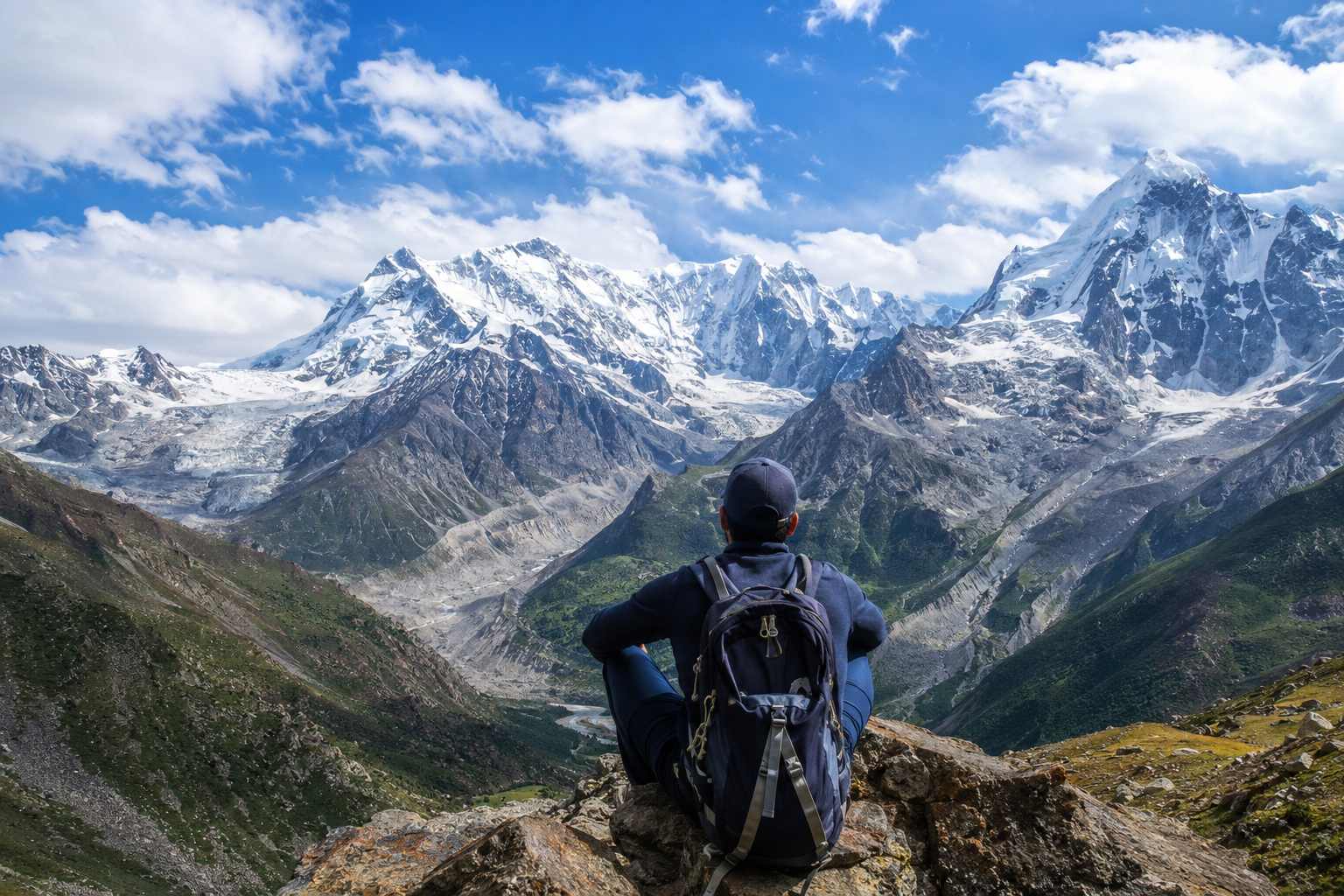
Skardu is one of Pakistan's most important trekking gateways. Short hikes around the valleys can be suitable for general travelers, while longer routes lead into some of the world's most dramatic high-altitude mountain environments.
The Central Karakoram routes around Shigar, Askole and the Baltoro Glacier are particularly important for serious trekkers and mountaineers.
Trekking at altitude requires preparation, acclimatization and appropriate equipment. Travelers should choose routes according to their experience and use qualified local guides and support teams for demanding journeys.
K2, Baltoro Glacier and Concordia
Skardu has an international reputation because of its connection with K2, the second-highest mountain in the world.
The traditional K2 approach begins from Skardu and continues through Shigar and Askole toward the Baltoro Glacier and Concordia. From this remote mountain environment, trekkers continue toward K2 Base Camp and other major peaks of the Central Karakoram.
This is not a conventional sightseeing excursion. A K2 or Baltoro journey requires substantial preparation, physical fitness, appropriate equipment, experienced guides and adequate time for acclimatization and changing mountain conditions.
If your interest is in the wider Karakoram rather than a technical mountaineering expedition, you can also explore trekking options that use Skardu as their logistical base.
Boating and Lake Experiences
Boating is one of the most relaxing activities available around Skardu's lake destinations. Upper Kachura and Lower Kachura provide particularly scenic settings where boating is available and local conditions permit.
A lake excursion does not have to be physically demanding. It can be an ideal activity for families, couples and photographers who want to enjoy the mountain landscape at a slower pace.
Always follow local safety instructions and use approved boating services when available.
Photography in Skardu
Skardu is one of the best destinations in Pakistan for landscape photography because several contrasting environments exist close together.
At Kachura Lakes, photographers can focus on reflections, water and mountain scenery. At Katpana, the composition changes completely as sand and rocky slopes dominate the foreground. Kharpocho Fort offers elevated views, while Shigar and surrounding valleys provide opportunities for cultural and architectural photography.
Early morning and late afternoon generally provide softer light and stronger mountain textures. Weather can change quickly, so patience is often part of the photography experience.
Other Outdoor Adventures
Depending on the season and local availability, visitors may also find opportunities for mountain biking, rock climbing, fishing, paragliding and winter activities.
These activities should be undertaken with appropriate equipment, qualified operators and consideration for weather and mountain conditions. High-altitude environments can become dangerous quickly when conditions change.
Things to Do in Skardu for Families
Skardu can be an excellent family destination when the itinerary is paced appropriately. Families do not need to undertake demanding treks to enjoy the region.
Family-friendly experiences can include Kachura Lakes, Shangrila, Katpana Cold Desert, selected cultural sites, scenic drives and relaxed time in the valley.
Families traveling with children should allow sufficient rest time, especially after arriving at altitude, and avoid packing too many long-distance excursions into a single day.
Skardu for Couples and Scenic Getaways
Skardu is also well suited to couples looking for a quiet mountain escape. Lakes, dramatic viewpoints, desert landscapes and peaceful valleys create plenty of opportunities for scenic experiences without requiring strenuous adventure.
Sunrise and sunset around the lakes and Katpana Cold Desert can be particularly memorable, while a longer itinerary allows couples to combine sightseeing with cultural experiences and relaxed time in the mountains.
Best Time to Visit Skardu
The best time to visit Skardu depends on what you want to do. Spring, summer and autumn each offer different experiences, while winter is suitable for travelers specifically prepared for snow and cold mountain conditions.
Spring in Skardu
Spring brings fresh greenery, blossoms and gradually warmer conditions to the lower valleys. It can be an attractive period for photography, cultural sightseeing and travelers who prefer a quieter atmosphere.
Summer in Skardu
Summer is one of the most popular seasons for Skardu tourism. Many high-altitude destinations become more accessible, making it an important period for Deosai trips, trekking and major Karakoram journeys.
Autumn in Skardu
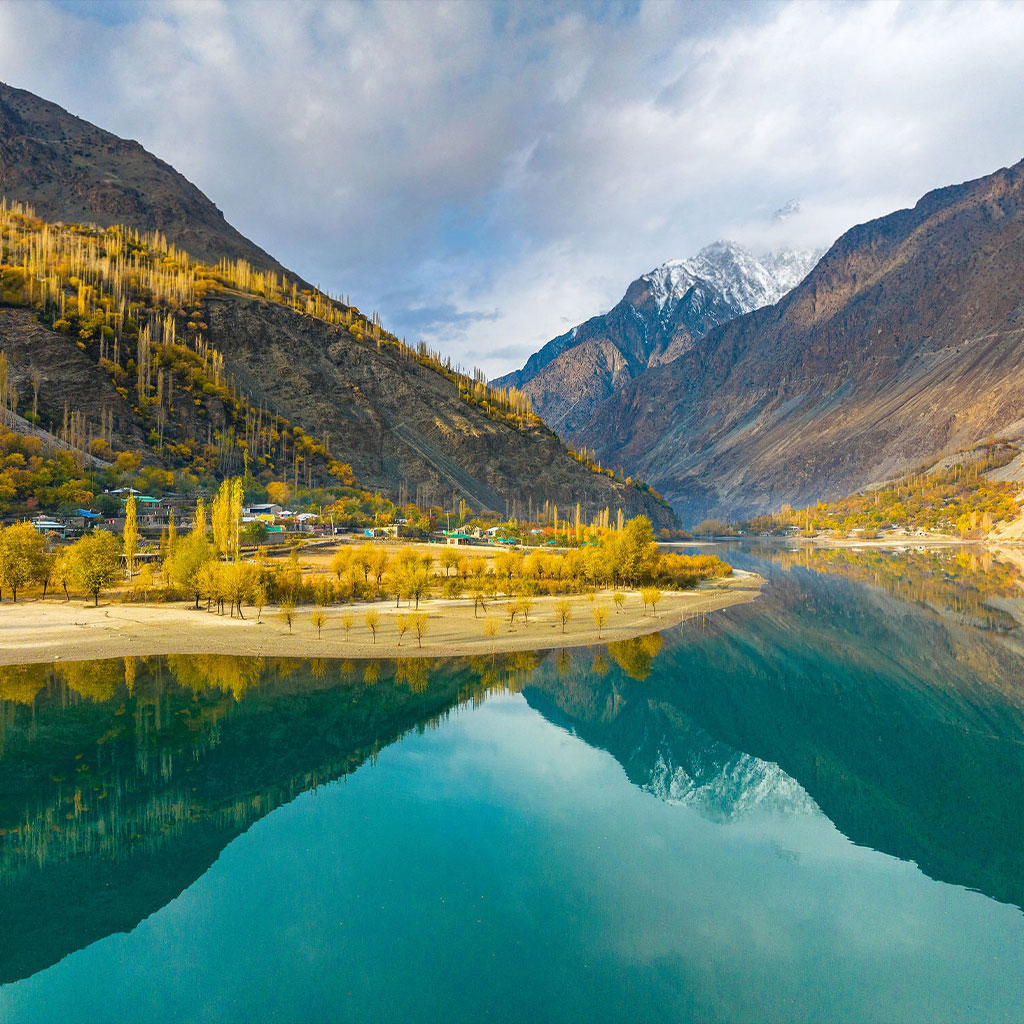
Autumn brings warm colors to trees and agricultural areas while the surrounding mountains create a dramatic background. The season can be especially rewarding for photographers.
Winter in Skardu
Winter transforms Skardu into a colder and quieter mountain destination. Snow and freezing temperatures can affect roads and access to higher destinations, so winter travelers need greater flexibility and appropriate clothing.
How to Reach Skardu
Skardu can generally be reached by road or by air. Your choice depends on your available time, budget, weather conditions and whether you want to experience the mountain road journey.
Traveling to Skardu by Road
Traveling by road gives you the opportunity to experience the changing landscapes of northern Pakistan. The journey takes you through dramatic mountain valleys and along major roads connecting the wider Gilgit-Baltistan region.
Road travel in the mountains requires flexibility. Construction, weather, landslides, traffic and local road conditions can influence journey times.
Flying to Skardu
Flying can save considerable travel time when flights are operating. However, mountain weather can affect schedules, so travelers should avoid making important trekking or international connections immediately dependent on a single flight.
How Many Days Do You Need in Skardu?
A first-time visitor can experience several major Skardu attractions in three to four days, but five to seven days provides a much better balance between sightseeing and relaxation.
If you want to include Deosai, Shigar, Khaplu or longer outdoor activities, additional time is recommended.
Travelers planning K2, Baltoro Glacier or other major trekking routes need a completely different time allowance based on the selected itinerary, acclimatization requirements and mountain conditions.
Suggested 5-Day Skardu Itinerary
If you are wondering how to organize your things to do in Skardu, the following five-day framework provides a practical starting point. Actual timing should be adjusted according to weather, road conditions and local operating conditions.
Day 1: Arrive and Explore Skardu
Arrive in Skardu and allow time to rest and adjust to the mountain environment. If your arrival time permits, explore the town and enjoy the surrounding scenery.
Day 2: Kharpocho Fort and Cultural Skardu
Visit Kharpocho Fort and Manthal Buddha Rock. Spend additional time exploring local markets and experiencing Balti culture and food.
Day 3: Upper and Lower Kachura Lakes
Spend the day around Upper Kachura Lake and Lower Kachura Lake and enjoy the scenery around Shangrila. Include boating where available and appropriate.
Day 4: Katpana Cold Desert and Satpara
Explore Katpana Cold Desert and continue toward Satpara Lake. Allow time for photography and scenic stops rather than rushing between locations.
Day 5: Shigar, Deosai or Extended Skardu
Use the final day according to the season and your interests. Choose Shigar and Shigar Fort for heritage, Deosai when seasonal access allows, or spend an additional day exploring Skardu at a relaxed pace.
Combining Skardu with Hunza
One of the best ways to experience northern Pakistan is to combine Skardu and Hunza in one multi-day journey.
Hunza offers a different character, with historic forts, orchards, dramatic villages, Attabad Lake, Passu and the upper Karakoram landscape. Skardu adds Baltistan's lakes, cold desert, heritage sites, Deosai and access to the K2 region.
Adventure Touristik's 12 Days Hunza & Skardu Valley Tour combines both regions and includes Skardu attractions such as Shigar Fort, Khaplu Fort, Upper and Lower Kachura Lakes and Manthokha Waterfall, followed by major Hunza attractions including Attabad Lake, Passu Cones and Khunjerab Pass.
If you are planning the wider journey, you can also explore our Attabad Lake History & Travel Guide as part of the Hunza section of your trip.
Skardu Travel Tips
Check the Weather Before Traveling
Mountain weather can change quickly. Check current conditions before traveling to Deosai, high-altitude trekking areas or remote valleys.
Keep Your Itinerary Flexible
Do not schedule every hour of your trip. Road conditions, weather and flight schedules can change, particularly in mountainous regions.
Give Yourself Time to Adjust
Skardu and the surrounding destinations are at significant elevation compared with Pakistan's lowland cities. Take the first day at a comfortable pace and allow your body time to adjust before demanding activities.
Pack Layers
Mountain temperatures can change considerably between daytime and night. Layered clothing is useful even during warmer travel seasons.
Protect Yourself From the Sun
Strong sunlight at altitude can make sun protection especially important. Sunglasses, sunscreen and appropriate clothing are useful during outdoor sightseeing and trekking.
Travel Responsibly
Help protect Skardu's fragile mountain environment. Avoid littering, reduce unnecessary plastic use, respect wildlife, stay on appropriate routes and follow local regulations in protected areas.
Support Local Communities
Choosing local guides, accommodation, transport services, restaurants and handicrafts can help tourism benefits reach communities across Baltistan.
Quick Facts About Things to Do in Skardu
- Destination: Skardu Valley, Baltistan, Gilgit-Baltistan, Pakistan
- Best known for: Mountain lakes, cold deserts, historic sites and Karakoram adventures
- Major attractions: Kharpocho Fort, Manthal Buddha Rock, Upper Kachura Lake, Lower Kachura Lake, Shangrila, Satpara Lake and Katpana Cold Desert
- Nearby destinations: Shigar, Khaplu and Deosai National Park
- Major adventure gateway: K2, Baltoro Glacier and Concordia
- Popular activities: Sightseeing, photography, boating, trekking, fishing, mountain biking and other outdoor adventures
- Local culture: Balti heritage, food, architecture and traditions
Frequently Asked Questions About Things to Do in Skardu
What are the best things to do in Skardu?
The best things to do in Skardu include visiting Kharpocho Fort, exploring Manthal Buddha Rock, visiting Upper and Lower Kachura Lakes, enjoying Shangrila, visiting Satpara Lake, exploring Katpana Cold Desert and taking excursions toward Shigar, Khaplu and Deosai.
What are the best places to visit in Skardu?
Major places to visit include Kharpocho Fort, Manthal Buddha Rock, Upper Kachura Lake, Lower Kachura Lake and Shangrila, Satpara Lake and Katpana Cold Desert. With more time, travelers can explore Shigar, Khaplu and Deosai National Park.
What adventure activities are available in Skardu?
Adventure activities in Skardu can include trekking, fishing, boating, rock climbing, mountain biking, paragliding and seasonal mountain activities. Skardu is also the gateway to major trekking and mountaineering routes toward K2 and the Baltoro Glacier.
Is Skardu the gateway to K2?
Yes. Skardu is the traditional logistical gateway for the K2 route. The classic approach continues from Skardu through Shigar and Askole toward the Baltoro Glacier and Concordia, before reaching the K2 Base Camp region.
Which Kachura Lake should I visit?
If your schedule allows, visit both Upper and Lower Kachura Lakes. Upper Kachura is known for its dramatic natural mountain setting, while Lower Kachura is associated with Shangrila and offers a more developed tourism environment.
Why is Katpana called a cold desert?
Katpana is a high-altitude desert landscape near Skardu. Its sandy terrain exists within a cold mountain environment, creating the unusual combination of desert scenery and high-altitude temperatures.
Can I visit Deosai from Skardu?
Yes. Deosai is commonly visited from the Skardu region when seasonal access and weather conditions permit. Because the plateau is at high altitude, travel conditions should be checked before departure.
Is Shigar worth visiting from Skardu?
Yes. Shigar is particularly worthwhile for travelers interested in Balti heritage, historic architecture and mountain landscapes. Shigar Fort is one of the region's major cultural attractions.
How many days are enough for Skardu?
Three to four days can cover many of the main attractions, while five to seven days provides more time for lakes, deserts, cultural sites and nearby valleys. Longer stays are recommended for Deosai, Khaplu or trekking and expedition journeys.
Is Skardu suitable for families?
Yes. Families can enjoy lakes, scenic drives, Shangrila, Katpana Cold Desert and selected cultural attractions without undertaking demanding treks. A slower itinerary is usually more comfortable for families traveling with children.
Is Skardu good for photography?
Skardu is an excellent photography destination. Lakes, deserts, forts, villages, mountain peaks and changing light provide a wide range of landscapes and cultural subjects.
What is the best time to visit Skardu?
The best season depends on your plans. Summer is important for many high-altitude activities and mountain journeys, while spring and autumn can be particularly attractive for scenery and photography. Winter offers a snowy experience but requires preparation for cold weather and possible travel disruption.
Can I combine Skardu with Hunza?
Yes. A combined Hunza and Skardu itinerary is one of the most comprehensive ways to experience northern Pakistan. The two regions offer different landscapes, cultural attractions and mountain experiences.
Can Adventure Touristik arrange a Skardu tour?
Yes. Adventure Touristik offers Skardu and combined Hunza-Skardu itineraries and can arrange customized journeys based on travel dates, group size, interests and route.
Plan Your Skardu Trip
Skardu is one of those destinations where the journey itself becomes part of the experience. From the historic walls of Kharpocho Fort to the turquoise waters of Kachura Lakes, from the golden Katpana Cold Desert to the vast wilderness of Deosai, every part of the region reveals a different side of Baltistan.
For adventure travelers, Skardu opens the way toward the Baltoro Glacier, Concordia and K2. For families and photographers, the valley offers lakes, deserts, viewpoints and cultural experiences that can be enjoyed at a more relaxed pace.
If you are planning a Skardu Valley tour, start with the complete Skardu Valley destination guide and then build your itinerary around the attractions and activities that interest you most.
For travelers who want to experience both major mountain valleys, explore Adventure Touristik's 12 Days Hunza & Skardu Valley Tour or request a customized Pakistan itinerary designed around your interests and travel dates.