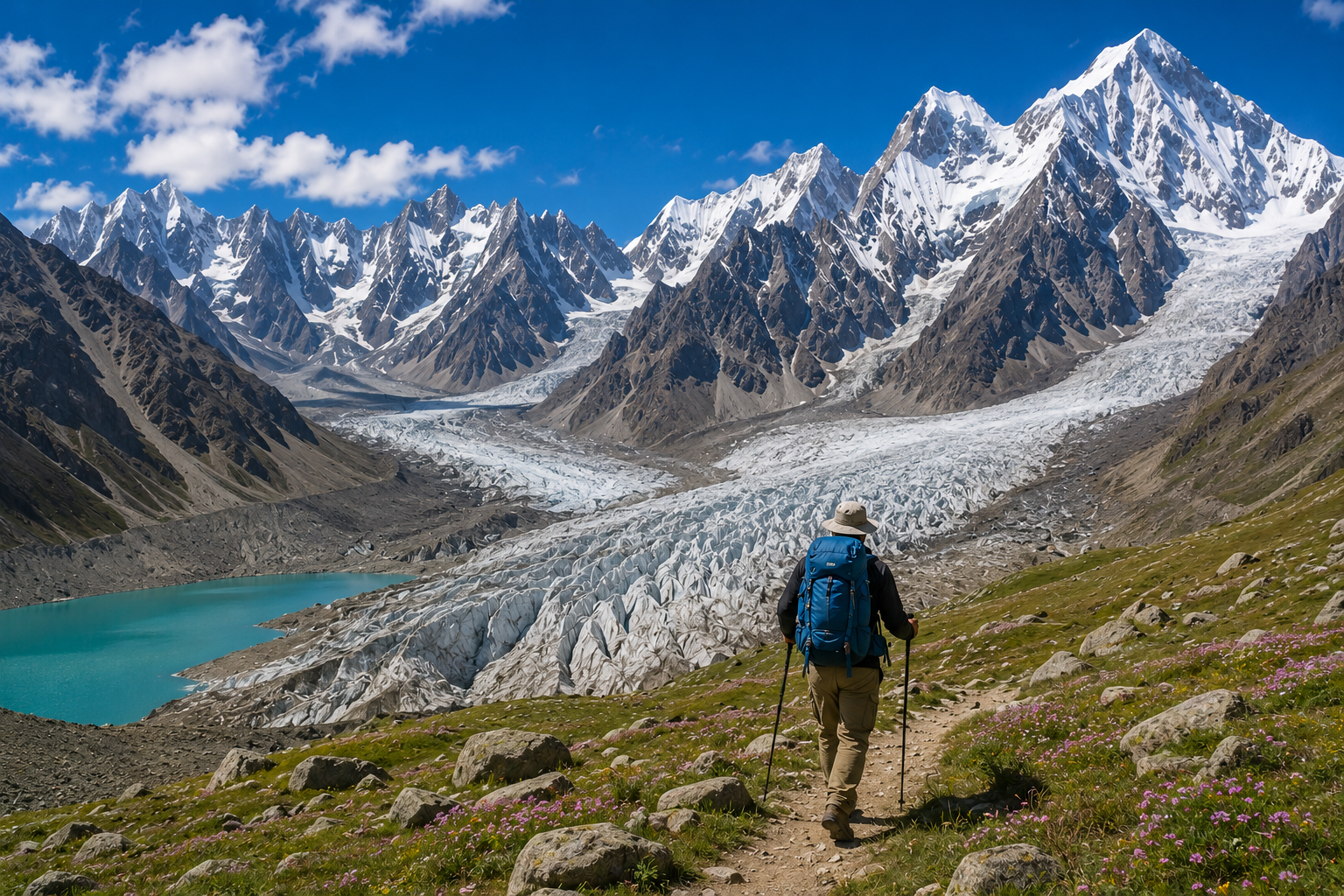
Hidden among the dramatic mountains and glaciers of Upper Hunza, Gilgit-Baltistan, the Patundas Trek is one of Pakistan’s most rewarding mountain adventures. With enormous glaciers, high alpine landscapes, traditional villages and panoramic views of the Karakoram, this trek offers travelers an opportunity to experience a quieter and wilder side of Hunza Valley.
Often searched as the Patundas Meadows Trek, Patundas Trek Hunza, or Passu Glacier Trek, this adventure takes hikers into the spectacular mountain landscape around Passu, Ghulkin and Borith Lake in Upper Hunza, also known as Gojal Valley.
While many visitors to Hunza explore the famous Karakoram Highway, Attabad Lake, Passu Cones and Khunjerab Pass by road, trekking toward Patundas offers an entirely different experience. Here, the roads disappear, the mountains feel closer, and the scale of the Karakoram becomes truly apparent.
For travelers planning a trekking tour in Pakistan, here is everything you need to know about the Patundas Trek in Hunza.
Where Is Patundas in Hunza?
Patundas is located in the mountainous landscape of Upper Hunza, or Gojal Valley, in Gilgit-Baltistan, northern Pakistan.
The trekking area is associated with the spectacular glacier systems around Passu and Batura and is generally approached from the Borith Lake, Ghulkin and Passu region.
Passu itself is one of the most recognizable destinations in northern Pakistan. The village lies along the Karakoram Highway and is surrounded by extraordinary natural attractions, including the famous Passu Cones, glaciers and some of the highest mountains of the Karakoram.
The Patundas trekking route leaves the more frequently traveled areas behind and enters a much more remote mountain environment.
This combination of accessibility and wilderness is one reason the Patundas Trek from Hunza is such an interesting option for international trekkers.
Why Is the Patundas Trek Special?
Hunza Valley has no shortage of spectacular viewpoints.
You can watch the sunset over the mountains from Duikar, drive beside the turquoise waters of Attabad Lake, photograph the Passu Cones from the Karakoram Highway or travel toward the Pakistan-China border at Khunjerab Pass.
Patundas, however, offers something different.
You have to walk to experience it.
As trekkers move away from the villages and deeper into the mountains, cultivated landscapes gradually give way to rugged trails, glaciers, alpine terrain and enormous mountain panoramas.
The journey itself becomes part of the experience.
Instead of simply looking at the Karakoram from a roadside viewpoint, you spend several days surrounded by it.
That sense of immersion is what makes trekking in Hunza Valley so memorable.
Patundas Meadows: A Natural Balcony over the Karakoram
One of the greatest rewards of the trek is reaching the elevated landscapes around Patundas.
From this area, trekkers can experience sweeping views across glaciers, valleys and some of the dramatic mountain formations of the Karakoram.
Depending on your exact location, weather and visibility, the wider mountain panorama can include views toward prominent peaks and massifs associated with the Passu and Batura region.
The scenery constantly changes with the light.
Early mornings can bring clear mountain views and long shadows across the glaciers. During the day, clouds may form around the peaks, creating an entirely different atmosphere. Around sunset, the mountains can take on warmer tones as the final light reaches the highest ridges.
For landscape photographers, hikers and nature lovers, Patundas offers countless opportunities.
It is not simply one viewpoint.
The entire journey is a moving panorama.
The Adventure Begins around Borith Lake
For many trekking routes toward Patundas, the adventure begins in the Borith Lake and Ghulkin area of Upper Hunza.
Borith Lake is surrounded by a dry, dramatic mountain landscape that contrasts beautifully with its water and nearby settlements.
The surrounding region also provides an interesting introduction to life in Gojal Valley.
Traditional villages, agricultural fields, irrigation channels and mountain pastures demonstrate how communities have adapted to one of the world's most dramatic high-mountain environments.
As the trek progresses beyond the settled landscape, the environment becomes increasingly wild.
This transition—from village life to high mountains—is one of the most interesting aspects of the Patundas journey.
Trekking near Passu Glacier
The Passu Glacier is one of the defining natural features of the trekking region.
Glaciers are dynamic environments. Their surfaces, routes and surrounding terrain can change over time due to seasonal conditions, temperature, ice movement and natural processes.
For this reason, travelers should not treat the Patundas Trek as an ordinary marked hiking trail.
Local knowledge matters.
An experienced local trekking guide can assess current trail and glacier conditions and select an appropriate route.
This is particularly important for international visitors who may be unfamiliar with the terrain of the Karakoram.
The glacier environment also creates some of the trek's most dramatic scenery.
Standing above or near these immense rivers of ice gives travelers a powerful sense of the scale of the mountains of northern Pakistan.
How Difficult Is the Patundas Trek?
One of the most common Google searches about this route is “Patundas Trek difficulty.”
The trek is generally described as a moderate mountain adventure, but that description needs context.
Difficulty depends on several factors, including your fitness level, previous hiking experience, altitude, weather, trail conditions and the condition of glacier-related sections.
Trekkers should be prepared to walk for several hours on consecutive days.
The terrain can include steep sections, loose rocks, uneven trails and challenging mountain surfaces.
Weather can also change quickly.
For these reasons, describing the Patundas Trek as “easy for everyone” would be misleading.
You do not necessarily need to be a professional mountaineer, but good physical fitness and preparation are strongly recommended.
Anyone with medical concerns should seek appropriate professional advice before undertaking a high-altitude trekking journey.
How Long Does the Patundas Trek Take?
Travelers researching the route may find very different Patundas Trek itineraries online.
Some hikers complete a shorter trekking-only journey in a few days, while organized Pakistan trekking packages may take considerably longer.
The difference is simple: a complete tour often includes much more than the trek itself.
A 13-day Patundas Trek Pakistan tour, for example, can include arrival in Islamabad, transportation to Gilgit-Baltistan, acclimatization, travel through Hunza, multiple trekking and camping days, cultural sightseeing and the return journey to Islamabad.
This longer format is particularly suitable for international travelers who want to experience both the trek and Hunza Valley rather than rushing directly into and out of the mountains.
A complete journey can include destinations such as:
-
Islamabad
-
Karakoram Highway
-
Upper Hunza and Gojal Valley
-
Gulmit
-
Ghulkin
-
Borith Lake
-
Passu
-
Patundas
-
Duikar
-
Karimabad
-
Historic and cultural attractions of Hunza Valley
The result is a more complete Pakistan adventure holiday combining trekking, culture and sightseeing.
What Is the Best Time for the Patundas Trek?
The warmer months are generally the main season for trekking in Hunza and the Karakoram.
Summer offers greater accessibility to high mountain areas, longer daylight hours and opportunities to experience the alpine landscapes and seasonal pastures of Upper Hunza.
However, there is no single date that guarantees perfect conditions.
Mountain weather is unpredictable.
Snowfall, rainfall, glacier movement and local trail conditions can influence trekking routes from one season to another.
Anyone planning a Patundas trekking tour should therefore check current local conditions before departure rather than relying entirely on information from previous years.
What Can You See on the Patundas Trek?
The biggest attraction is undoubtedly the mountain scenery, but the trek offers much more than one famous view.
Passu and the Karakoram Mountains
Passu is surrounded by some of northern Pakistan’s most recognizable landscapes.
The sharp profile of the Passu Cones has become an icon of Pakistan tourism, but the wider region contains glaciers, high peaks, valleys and traditional settlements that deserve much more time to explore.
Glaciers
The glacier systems of Upper Hunza are among the defining features of the region.
Their immense scale becomes much more apparent when experienced on foot rather than viewed briefly from the road.
Borith Lake
Borith Lake provides a beautiful contrast to the surrounding dry mountains and makes an excellent stop before or after trekking.
Alpine Landscapes
As trekkers gain elevation, the scenery changes significantly.
High pastures and open mountain landscapes provide opportunities for camping, photography and quiet exploration away from busy tourist centers.
Traditional Communities
Upper Hunza is not simply a mountain destination.
It is a living cultural landscape.
The villages of Gojal have their own architecture, agricultural traditions, languages, food and community life.
Respectful interaction with local communities adds an important cultural dimension to any trekking journey.
Culture Is Part of the Journey
Many international travelers initially visit Hunza because of photographs of its mountains.
They often leave remembering its people just as strongly.
Hunza and Gojal are home to culturally rich mountain communities that have adapted to the challenging geography of the Karakoram for generations.
Traditional irrigation systems have transformed dry mountain slopes into productive agricultural landscapes.
Apricot, apple and other fruit trees grow around settlements, while livestock and seasonal pastures remain connected to rural life in many areas.
Visitors may also hear several local languages while traveling through the wider Hunza region.
A responsible Hunza trekking tour should therefore be more than an outdoor adventure.
It should create opportunities to understand the communities that call these mountains home.
Patundas Trek or Batura Glacier Trek: Which Should You Choose?
Travelers researching trekking tours in Hunza often compare Patundas with the Batura Glacier Trek.
Both offer extraordinary Karakoram scenery, but they provide different experiences.
The Patundas route is particularly attractive for travelers seeking elevated panoramic views, glacier landscapes and a trekking experience that can be combined relatively easily with a wider Hunza itinerary.
The Batura Glacier region is ideal for trekkers interested in a longer journey through one of the great glacier landscapes of the Karakoram.
If you have enough time, both can form part of a larger trekking itinerary in northern Pakistan.
Other excellent trekking options in Gilgit-Baltistan include Rakaposhi Base Camp, Rush Lake, Shimshal Pass, Fairy Meadows and Nanga Parbat Base Camp, depending on your experience, available time and preferred difficulty level.
What Should You Pack for the Patundas Trek?
Packing correctly is essential for any mountain trek in Pakistan.
Your exact equipment list should depend on the season and current conditions, but trekkers will generally need suitable hiking boots, layered clothing, warm clothing for evenings, waterproof protection, sun protection, a hat, gloves, reusable water bottles, trekking poles, personal medication and a comfortable backpack.
A good sleeping bag appropriate for expected temperatures is also important when camping.
Avoid overpacking.
Porter arrangements normally have baggage limits, and unnecessary weight creates additional logistical challenges.
Your tour operator should provide a detailed packing list before departure.
Responsible Trekking in Hunza
As tourism grows in northern Pakistan, responsible travel is becoming increasingly important.
Remote mountain environments are especially vulnerable to waste and environmental damage.
Trekkers should avoid leaving plastic bottles, food packaging, wet wipes and other non-biodegradable waste on trails or at campsites.
Visitors should also respect local customs, ask permission before closely photographing people and avoid disturbing livestock or agricultural areas.
Where possible, travelers should support locally owned accommodation, guides, porters, drivers, restaurants and small businesses.
Tourism has the greatest positive impact when economic benefits remain within local communities.
Why Travel with a Local Trekking Company?
Organizing a trek in the Karakoram involves much more than booking a hotel and following a map.
Transportation, accommodation, guides, porters, camping equipment, food, route planning and changing mountain conditions all need coordination.
Working with an experienced local operator also provides access to up-to-date knowledge.
A route described in a blog several years ago may not reflect current glacier or trail conditions.
Local guides understand these changes and can adapt plans when necessary.
Adventure Touristik organizes trekking tours in Hunza, Gilgit-Baltistan and northern Pakistan, including private and customized itineraries for international and domestic travelers.
A Suggested 13-Day Patundas Trek Hunza Journey
For travelers who want more than a short hike, a 13-day itinerary provides time to combine trekking with the wider experience of northern Pakistan.
A typical journey can begin with arrival in Islamabad before traveling north toward Chilas and Hunza.
After reaching Upper Hunza, trekkers prepare for the journey around Ghulkin, Borith Lake and the Passu Glacier region.
Several days are then dedicated to trekking and camping toward Patundas and the surrounding high mountain landscapes.
After completing the trek, travelers can continue to Central Hunza to explore Duikar and Karimabad.
This provides time to experience Hunza's cultural heritage before returning toward Islamabad.
The advantage of this itinerary is balance.
You experience adventure without making the entire holiday about walking.
There is time for photography, culture, local food, sightseeing and simply enjoying the mountains.
Is Patundas Worth Visiting?
For travelers who love mountains, the answer is easy.
Patundas offers many of the qualities that make trekking in northern Pakistan exceptional: enormous landscapes, glaciers, remote trails, alpine camping and the hospitality of mountain communities.
It is also an excellent choice for travelers who want to move beyond the standard sightseeing circuit.
Attabad Lake, Passu Cones and the Karakoram Highway are spectacular, but seeing Hunza entirely from a vehicle reveals only part of the region.
Walking into the mountains changes your perspective.
Distances become real.
Glaciers reveal their true scale.
The silence becomes noticeable.
And places that looked small from the road suddenly become enormous landscapes.
That is the real attraction of the Patundas Meadows Trek.
Frequently Asked Questions About the Patundas Trek
Where is the Patundas Trek located?
The Patundas Trek is located in Upper Hunza, also known as Gojal Valley, in Gilgit-Baltistan, northern Pakistan. The trekking region is associated with Borith Lake, Ghulkin, Passu and the surrounding glacier landscapes.
Is the Patundas Trek difficult?
The Patundas Trek is generally considered moderate, but trekkers should have good physical fitness. Difficulty can change according to altitude, weather, glacier conditions and the exact route.
Can beginners do the Patundas Trek?
Fit beginners with appropriate preparation may be able to undertake the trek with experienced local guidance. However, it should not be treated as a casual walk because mountain and glacier-related terrain can be challenging.
What is the best season for the Patundas Meadows Trek?
The warmer months are generally the main trekking season. Exact conditions vary each year, so travelers should confirm current trail, weather and glacier conditions before departure.
Do I need a guide for the Patundas Trek?
Traveling with an experienced local guide is strongly recommended, particularly for visitors unfamiliar with the region. Glacier-related routes and mountain trails can change, and local knowledge significantly improves navigation, logistics and safety.
Can I combine Patundas with other places in Hunza?
Yes. A Patundas trekking holiday can be combined with Karimabad, Altit, Duikar, Attabad Lake, Gulmit, Passu, Hussaini, Borith Lake and Khunjerab Pass. Longer Pakistan itineraries can also include Fairy Meadows, Skardu and other destinations in Gilgit-Baltistan.
Plan Your Patundas Trek in Hunza
The Patundas Trek via Passu Glacier offers something increasingly valuable in modern travel: the opportunity to slow down and experience a landscape on foot.
From the villages and lakes of Upper Hunza to immense glaciers and high mountain panoramas, every stage reveals another side of the Karakoram.
For adventure travelers, photographers, hikers and anyone searching for an authentic Pakistan trekking experience, Patundas deserves a place on the list.
Adventure Touristik offers a 13-day Patundas Trek Hunza tour as well as private and customized trekking holidays across northern Pakistan.
Travelers can combine Patundas with other destinations in Hunza and Gilgit-Baltistan to create a personalized Pakistan adventure based on available time, fitness and interests.
Whether you are planning your first trekking holiday in Pakistan or returning to explore deeper into the Karakoram, the journey to Patundas is an opportunity to discover one of Hunza’s remarkable high-mountain landscapes.
Ready to explore the Karakoram? Plan your Patundas Trek Hunza adventure with Adventure Touristik and experience Upper Hunza beyond the ordinary tourist trail.